
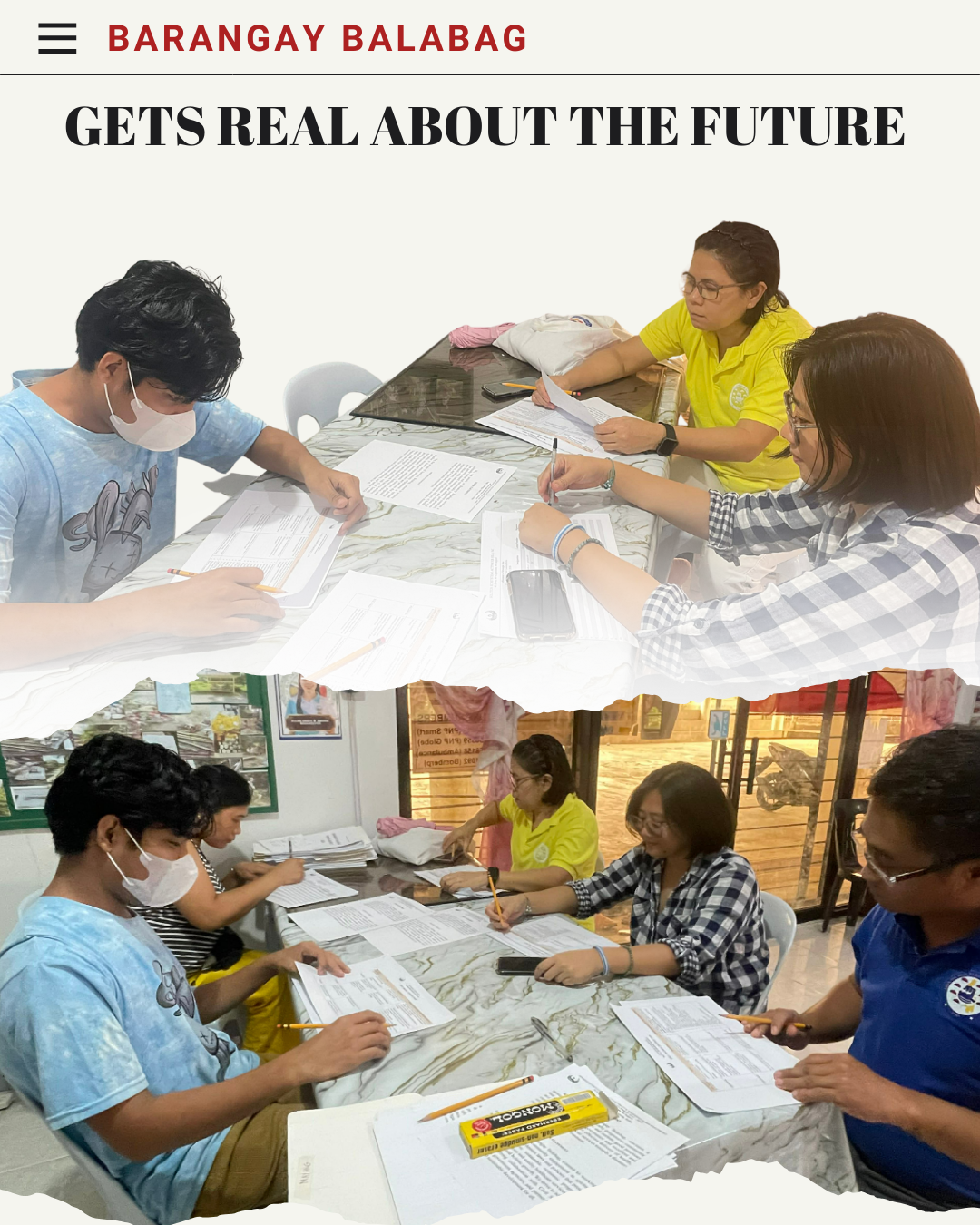
On February 5, 2026, the covered gym of Barangay Balabag, New Lucena transformed from its usual all-purpose space into a thinking ground—where ideas were stretched, refined, and sometimes lovingly poked until they made sense for real life. Thirteen participants—barangay officials, Barangay Health Workers (BHWs), and Sangguniang Kabataan (SK) representatives—gathered for the Strategic Plan Refinement, an activity that proved that planning doesn’t have to be stiff, intimidating, or wrapped in jargon.
“Indi ni siya para sa papel lang,” one participant casually remarked while reviewing the vision statement. “Dapat ma-feel gid sang mga pumuluyo.”
(“This isn’t just for paperwork. The people should really feel it.”)
And that line pretty much set the tone for the day.
Reading, Reflecting, and Saying “Yes, That’s Us”
The activity began with participants reading through their AI-generated revised vision and mission statements—a moment that could have gone either way. But instead of resistance or long debates, there was something refreshing: collective nodding.
No revisions. No objections. Just quiet agreement.
Sometimes, the strongest validation isn’t loud applause—it’s the absence of protest.
From there, the group moved into the heart of the session: reviewing the Programs, Projects, and Activities (PPAs) across different development dimensions. Participants identified which PPAs were already completed, clarified those that needed better definition (like the much-talked-about Oplan Tupi, now clearly anchored on eco-brick making), and added initiatives they felt were missing but necessary.
“Damo na kita nahimo, wala lang naton nabantayan,” someone joked.
(“We’ve already done a lot—we just didn’t realize it.”)
A Plan That Touches Every Part of Life
What emerged was not just a strategic plan, but a portrait of barangay life, thoughtfully mapped across key result areas:
- Economic goals focused on productivity and livelihood—ranging from dressmaking, bread and pastry training, kakanin and soap making, to vegetable gardening, aquaculture, and increased rice production. Practical skills, real income, real impact.
- Political initiatives doubled down on transparency and good governance, with leadership trainings, ordinance-making workshops, budgetary evaluations, and even strategic use of social media for public accountability. Governance, but make it accessible.
- Cultural programs read like a love letter to tradition—Laro ng Lahi, Bayanihan, Kalag-kalag Festival, Harana kay Maria, Pamalayi, and more—ensuring that progress never comes at the cost of identity.
- Social services aimed to improve daily living through ambulances, fire trucks, health center upgrades, first aid training, youth camps, drainage systems, and inclusive spaces for PWDs, seniors, solo parents, and the youth.
- Ecological actions addressed both prevention and preparedness: waste management, ecobricks, tree planting, flood control, river clean-ups, and proposed ordinances banning harmful practices like burning trash and rice straw—all explained in language everyone could understand, even reminding residents what to do when disaster strikes.
- Spiritual life was given equal importance, with activities such as Flores de Mayo, recollections, prayer meetings, visitation for the sick, and values formation for children—because peace isn’t only physical; it’s also deeply personal.
- Human development tied everything together, tackling modern challenges head-on: mental health awareness, financial literacy, anti-VAWC and anti-drug campaigns, digital responsibility, parenting programs, and even an Anti-Marites Ordinance—a crowd favorite that sparked both laughter and knowing looks.
“Kon indi ta pag-istaran, indi man na mag-uswag,” one SK member said.
(“If we don’t really live it, it won’t progress.”)
From Big Ideas to Shared Snacks
After hours of reading, clarifying, deleting outdated PPAs, and adding new ones that better reflected community needs, the session wrapped up not with a formal closing—but with snacks and conversation, the unofficial but essential Filipino way of sealing consensus.
No grand speeches. Just people who knew they had done meaningful work.
The Real Output
Beyond the matrices, goals, and objectives, the real output of the Strategic Plan Refinement was ownership. Barangay Balabag didn’t just refine a document—it affirmed a shared direction, grounded in culture, responsive to current needs, and hopeful about what’s possible.
Plans were refined. Priorities were aligned. PPAs were deleted, added, and clarified.
And most importantly, the future stopped being abstract—and started feeling achievable.


Leave a Reply