
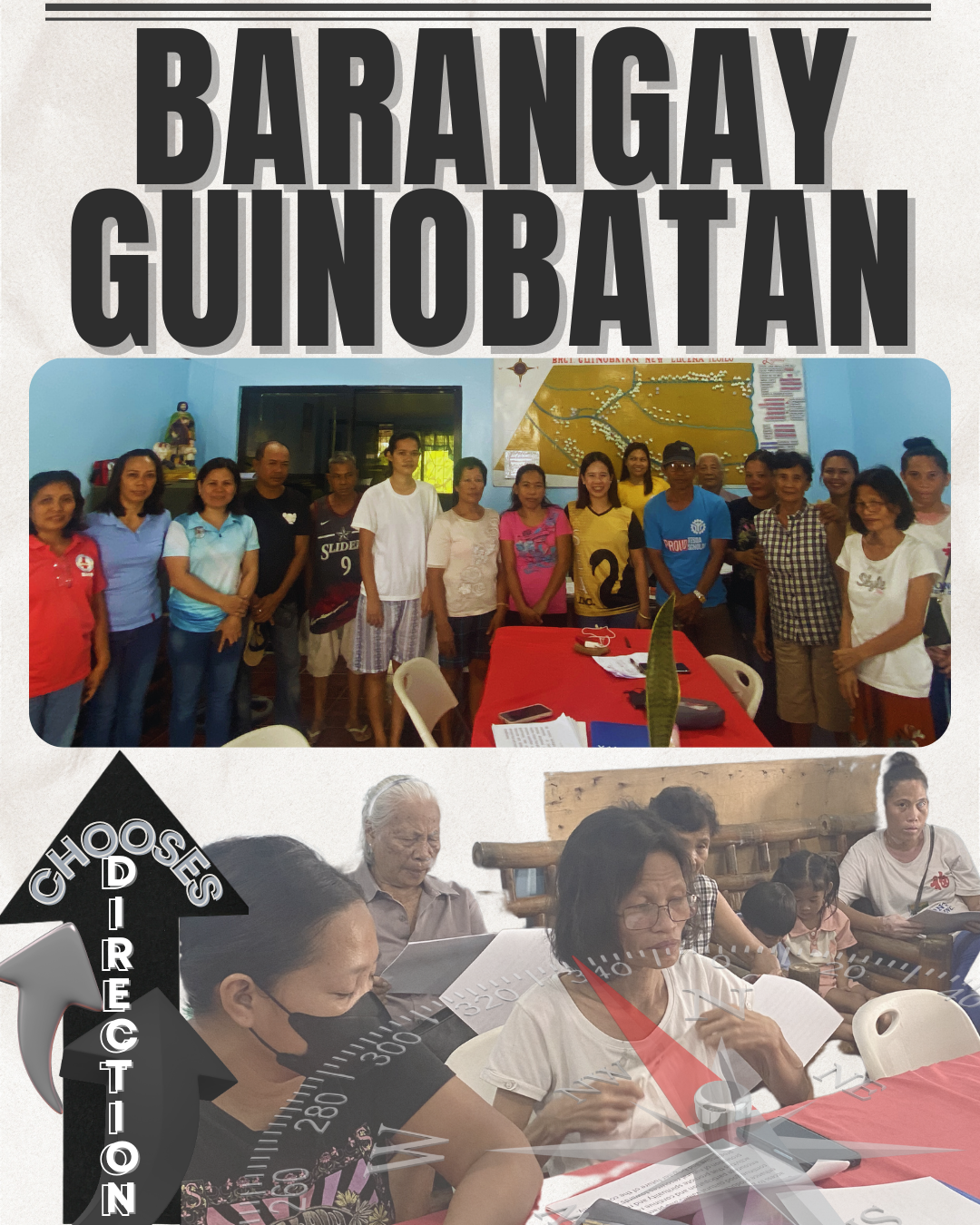
On February 24, 2026, from 9:30 to 11:30 in the morning, the Barangay Multipurpose Hall of Brgy. Guinobatan in New Lucena, Iloilo became more than just a venue for a meeting — it became a space for collective decision-making and future shaping. The General Assembly for the Adoption of the Strategic Plan gathered 35 participants, exceeding the expected target of 30, with barangay officials, BHWs, farmers, TODA members, and tanods all present and engaged.
At its core, the activity was about adopting the strategic plan and reaffirming the revised vision and mission statements of the barangay. Angela Betita, SEA Community Facilitator, facilitated the discussion by first presenting copies of the revised vision and mission. The participants were asked if they had suggestions or revisions. Silence filled the room — not as hesitation, but as agreement. With no additional revisions raised, the assembly moved forward to the strategic plan itself.
Ms. Betita, carefully walked everyone through the goals, objectives, and projects, programs, and activities (PPAs) under each key result area or dimension of sustainable development. Instead of simply presenting information for approval, she invited participation. The room was encouraged to respond — to agree, to question, and to suggest improvements.
Under the economic dimension, participants expressed strong interest in practical livelihood initiatives such as massage therapy training and driving training. These were not abstract proposals but skills-based opportunities that could directly improve household income and expand employment options. A farmer in the discussion reflected that when people gain practical skills, they gain confidence and stability during lean seasons. The emphasis on livelihood training showed that economic development in the barangay is grounded in realistic and accessible opportunities.
In the social dimension, progress was visible both in infrastructure and connectivity. The renovation of the barangay hall was highlighted as an ongoing priority, symbolizing the improvement of public service spaces. The installation of street lights in all sitios had already begun, enhancing safety and mobility at night. In addition, the installation of WiFi in the barangay hall had been completed, strengthening access to information and communication. These improvements reflect how social development is not only about programs but also about creating functional spaces and systems that support daily life.
Environmental concerns were discussed with seriousness and responsibility. The barangay aligned itself with the Limpyo Iloilo Program and proposed ordinances that encourage replacing cut trees, promoting pruning over cutting — especially among coal makers — and protecting native tree species. Tree planting initiatives were also identified as part of flood control efforts. The conversation showed awareness that environmental protection requires policy support and community cooperation. Participants understood that protecting trees is not merely symbolic; it is practical action to reduce flooding and preserve natural resources for future generations.
The humane dimension opened an important and honest discussion about mental health. Participants acknowledged that there are four known cases of mental illness in the barangay. While assistance is provided, beneficiaries must present certification to access support. Bringing mental health into an open forum reduced stigma and emphasized compassion as part of governance. At the same time, participants identified Zumba sessions as a priority activity. Beyond fitness, these sessions promote social interaction and community bonding. It is a reminder that well-being includes both mental support systems and opportunities for physical activity.
Under the political dimension, the assembly addressed participation and organizational strengthening. The reorganization of KALIPI and the Solo Parent group was proposed to encourage active involvement. Assistance for DOLE registration for farmers and civil society organizations was also discussed to formalize groups and improve access to government support. The issue of the proposed open pipe ordinance was examined realistically. Participants recognized that implementation at the barangay level is limited by the absence of proper equipment and enforcement capacity at the municipal level. Instead of enforcing penalties that cannot be implemented effectively, the barangay agreed that warnings could be issued while acknowledging practical constraints. This candid discussion reflected responsible policymaking — proposing rules that match capacity.
After thorough discussion across all dimensions, the moment of formal action arrived. Sir Roger Calambro, president of the farmers’ association, motioned for the adoption of the strategic plan. Kagawad Marlyn Hisanza seconded the motion. With that gesture, the community collectively approved the plan.
The adoption was not just procedural. It represented alignment between leadership and community stakeholders. It signified ownership of goals, accountability for implementation, and shared responsibility for outcomes.
The General Assembly in Brgy. Guinobatan proves that strategic planning becomes meaningful when it involves participation. Vision statements gain power when they are reviewed openly. Programs gain legitimacy when they are discussed transparently. Policies become effective when they reflect real conditions on the ground.
Governance is not about documents sitting on shelves. It is about conversations that turn into commitments and commitments that turn into action. On February 24, 2026, Brgy. Guinobatan demonstrated that progress happens when people show up, speak up, and agree on a direction forward — together.


Leave a Reply