
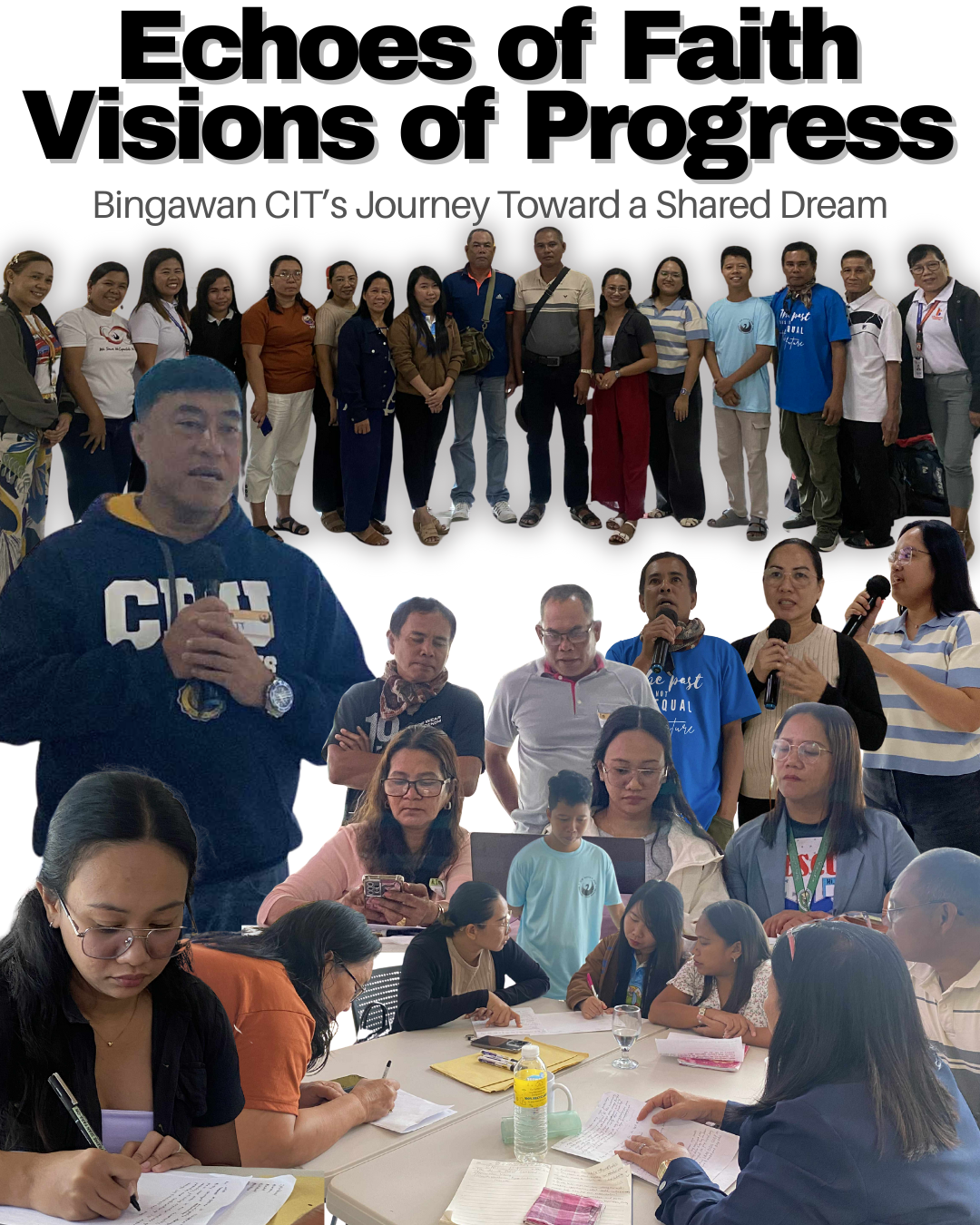
Outside the Board Room of Lifebank Academy in Santa Barbara, the winds of a storm were making their presence felt. Yet, inside, a different kind of energy was brewing—not one of turbulence, but of unity, resilience, and quiet determination.
On November 25 and 26, 2025, the Bingawan Collective IPAT-SIAD Team (CIT) gathered for a two-day Appreciative Inquiry (AI) and Strategic Planning Workshop. Despite the weather and the long journey, 25 participants representing the “three-folding” partnership—Civil Society Organizations (CSOs), the Local Government Unit (LGU), and business groups—came together to weave the future of their municipality.
Beyond the Storm: A Convergence of Hearts
The gathering was more than a technical meeting; it was a reaffirmation of identity. Mayor Matt Palabrica set the tone early on, steering the group away from traditional bureaucracy and toward “thinking outside the box.” He emphasized that a better Bingawan is built not in silos, but through the cross-pollination of ideas between government agencies, NGOs, and the community.
Facilitated by the Solution Ecosystems Activator (SEA) team, including Carlo Miñas, Avha Hilario, and Cheryl Luis True, the workshop utilized the Appreciative Inquiry (AI) approach. Unlike traditional problem-solving that focuses on “what is wrong,” AI asks, “What is working?” and “What gives life to this community?”
The Discovery: “Linong” and Faith
During the Discovery Stage, the room came alive as participants reflected on the question: Why do we choose to live in Bingawan?
The answers painted a portrait of a town defined by its soul. Bingawan is not just a place on a map; it is a sanctuary. The participants spoke of “Linong” (peace and order), a drug-free community, and a deep, abiding faith. As the only municipality founded by American Baptist Missionaries, Bingawan carries a unique legacy—a “Christian community” where the first day of the month is marked by prayer and reflection.
It is a place where nature is cherished (“No landslides,” “Beautiful nature”) and where the people are described as humble, hospitable, and governed by transparency. This shared identity formed the bedrock for the days ahead.
Dreaming Together: A Spiritually Grounded Future
Transitioning into the Dream Stage, the walls between sectors dissolved. When asked what they wished for their future, the CIT didn’t just ask for infrastructure; they asked for values.
They dreamed of a community that is “spiritually well-grounded,” where children are not just successful professionals but “God-fearing and productive citizens.” They envisioned a municipality with accessible healthcare, a vibrant local economy powered by sugarcane and modern farming, and a culture where Bayanihan (communal unity) remains the law of the land.
This collective aspiration was crystallized into a new, powerful Vision Statement that bridges the gap between the material and the spiritual:
“A spiritually grounded and progressive municipality led by accountable, ethical, and genuinely responsible leaders… A community that honors its heritage while protecting its natural environment, energized by a resilient and sustainable economy…”
Designing the Path Forward: The 7 Dimensions
With a clear vision in hand, the workshop shifted to the Design Stage, merging AI with a strategic SWOT analysis. Guided by the 7 Dimensions of Development—Social, Spiritual, Ecological, Political, Economic, Humane, and Cultural—the team began the hard work of translating dreams into action.
From plans to establish a wildlife sanctuary and enforce “No Plastic Policies” (Ecological), to launching “Transformational Programs for Rebel Returnees” (Social), and strengthening the “Sugar Cane Industry” (Economic), the roadmap created was holistic. Crucially, the Political dimension emphasized not just governance, but participatory governance—ensuring that the budget is transparent and the youth are trained as future leaders.
Reflections in Motion
As the workshop concluded, the strategic plan was still evolving—a testament to the depth of the discussion. Berna Halongong, in her closing remarks, reminded everyone that Bingawan is fortunate. It is rare to find a town where the leadership, the church, the farmers, and the vendors sit at the same table, writing the same story.
The storm outside may have passed, but the fire ignited in Santa Barbara will return to Bingawan. It travels back in the hearts of the 25 participants who now see their town not just for what it is, but for the spiritually grounded, progressive beacon it is destined to become.
The journey continues.


Leave a Reply