
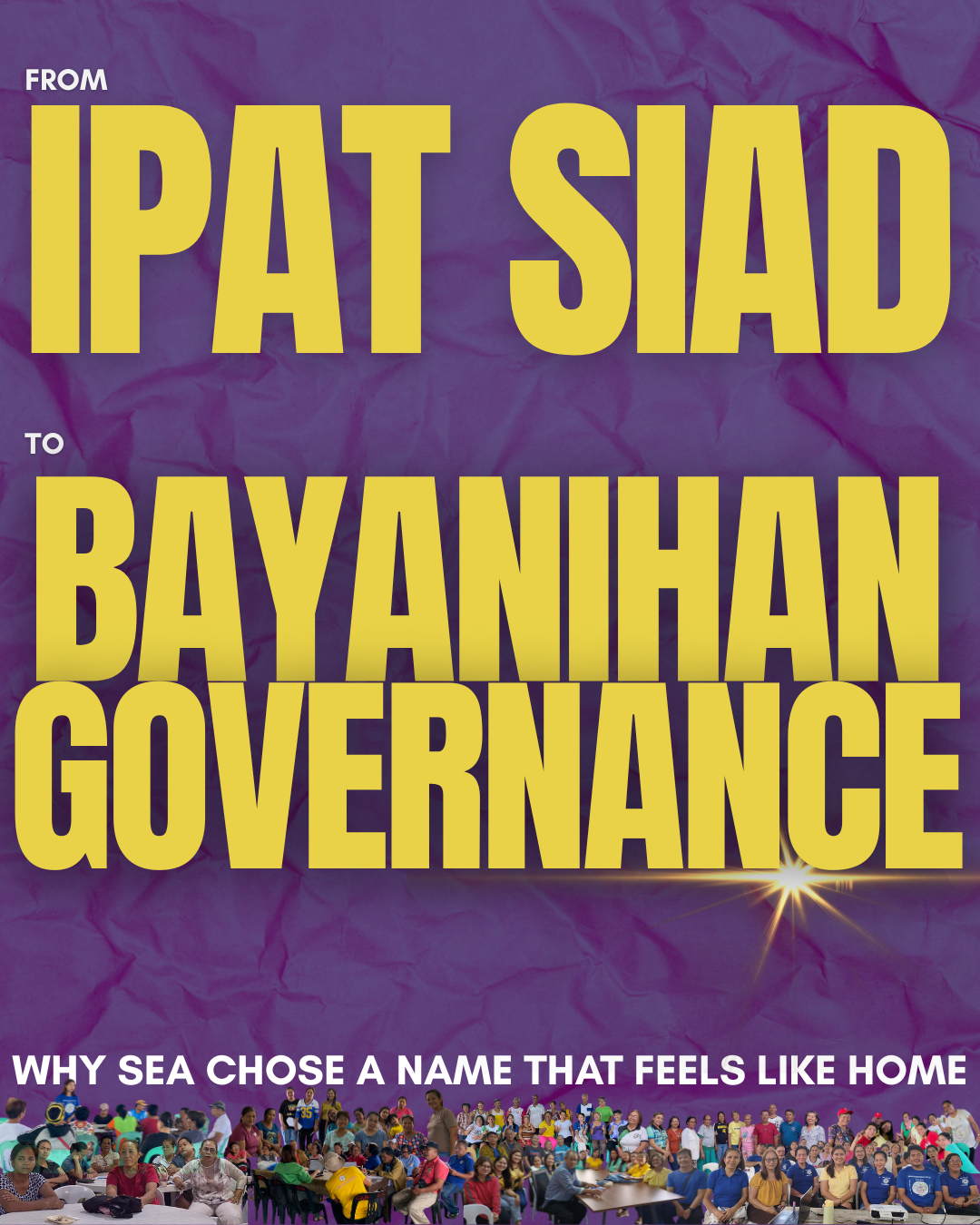
In 2026, SEA’s IPAT-SIAD program began to be called Bayanihan Governance. At first, it may seem like a simple change in name, but in reality it reflects how the program has grown. Over the years, the work of SEA with local governments, civil society organizations, and communities began to resemble something very familiar in Filipino culture—bayanihan.
Bayanihan, after all, is not just about neighbors carrying a house together. It represents the Filipino way of solving problems—through cooperation, shared responsibility, and community spirit.
This idea is also reflected in the Philippine Development Plan, particularly under the Malasakit pillar, which promotes a whole-of-society approach to development. It encourages government, civil society, the private sector, and citizens to work together in addressing complex challenges. In simple terms, development becomes stronger when everyone participates, not when only one sector does the work.
This is exactly what SEA has been nurturing through IPAT-SIAD. Over time, the program helped organize civil society groups, strengthen local leadership, and create spaces where LGUs, CSOs, and community members could plan and act together. What started as a program gradually became a shared effort among sectors.
As one community leader once said during a local planning session, “Hindi na ito project ng SEA. Project na ito ng buong komunidad.” (This is no longer SEA’s project—it is now the community’s project.)
That simple realization captures why the shift to Bayanihan Governance feels natural.
The approach also highlights the importance of values-based leadership. Programs may introduce systems and activities, but sustainable change happens when leaders practice malasakit, accountability, and cooperation. That is why SEA continues to invest in leadership development and Inner Conditioning Workshops, believing that good governance starts from the character and commitment of the people involved.
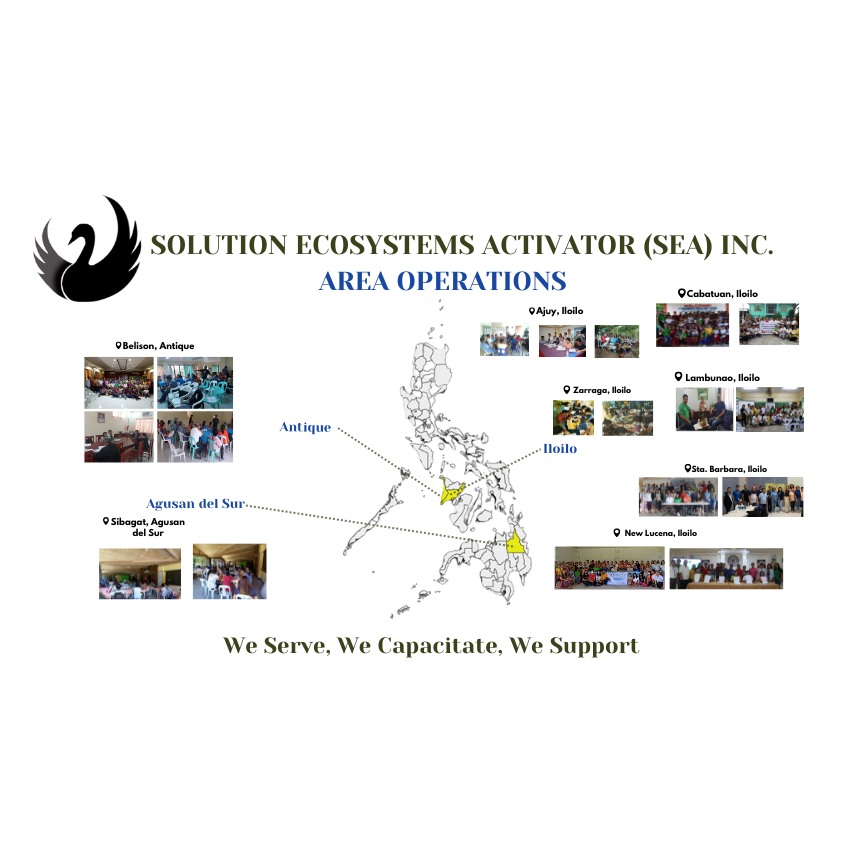
Today, the collaboration among local governments, civil society organizations, and community leaders in SEA partner areas shows how governance can move beyond formal structures and become a shared responsibility.
In many ways, the transition from IPAT-SIAD to Bayanihan Governance simply acknowledges what communities have already demonstrated: when people work together with trust, compassion, and shared purpose, development becomes more inclusive, more responsive, and more sustainable.
Because in the end, bayanihan is not just a tradition—it is a practical way of building the future together.


Leave a Reply