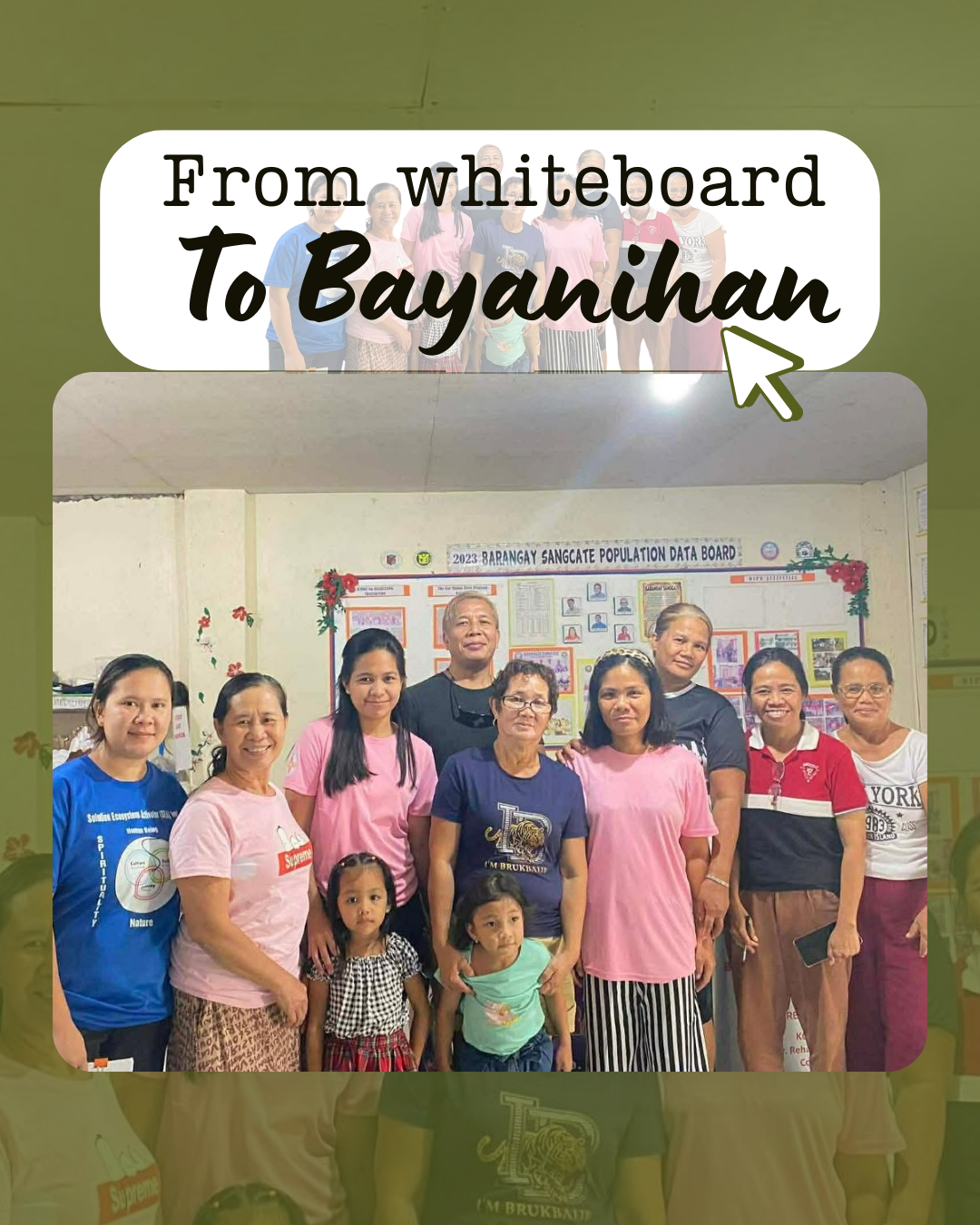
If you walked into Barangay Sangcate’s session hall on January 8, 2026, you might have thought it was just another meeting—papers on the table, pens in hand, the familiar hum of people settling into plastic chairs. But give it ten minutes and you’d realize something else was happening. This wasn’t about filling forms. It was about asking the braver question: Are our plans still making sense for the people we serve?
The CSO Strategic Plan Refinement brought together barangay officials, Civil Society Organizations, community representatives, and SEA staff in a rare but refreshing moment of collective honesty. Plans were not treated as sacred texts. They were treated as drafts—meant to be questioned, challenged, and improved.
One CSO representative casually said during the discussion, “Maganda ang plano natin, pero may kulang pa.” (Our plan looks good, but something is still missing.) That simple line set the tone for the day. Instead of defending old strategies out of habit, participants leaned in, shared observations from the ground, and named gaps that only lived experience can reveal.
The activity’s goal was straightforward: review, validate, and refine existing goals, strategies, and priority programs so they remain relevant and effective. What made it powerful was how this was done. Everyone had a voice. Barangay officials listened to CSOs. CSOs listened to each other. SEA staff helped frame the conversation so it stayed practical and forward-looking. It was planning as dialogue, not monologue.
There was even a light moment when someone joked, “Hindi pwedeng pang-2020 ang plano kung 2026 na.” (A 2020 plan won’t work in 2026.) Laughter followed—but the point was serious. Communities change. Needs evolve. Plans must move with them, or they risk becoming beautifully written but useless.
By the end of the session, the group had finalized updated strategies and clearer action plans. More importantly, there was shared ownership. These were no longer “barangay plans” or “CSO plans”—they were our plans. And that sense of shared responsibility is exactly where SEA’s Bayanihan Governance framework comes alive.
Bayanihan governance is not just about coordination; it’s about co-creation. It recognizes that development works best when government and civil society sit at the same table, argue respectfully, laugh occasionally, and walk away with a common direction. The Sangcate planning session showed that when CSOs are treated as partners—not just participants—plans become sharper, more grounded, and more humane.
As one barangay official reflected at the end, “Mas malinaw ngayon kung saan kami papunta, kasi sabay-sabay naming pinag-isipan.” (It’s clearer now where we’re going because we thought it through together.)
In a time when meetings often feel like rituals with no real impact, this CSO Strategic Plan Refinement was a quiet reminder that good governance doesn’t always look dramatic. Sometimes, it looks like people around a table, revising goals, admitting what’s not working, and choosing—together—to do better.
And that, in the language of SEA Bayanihan Governance, is development done right.


Leave a Reply