
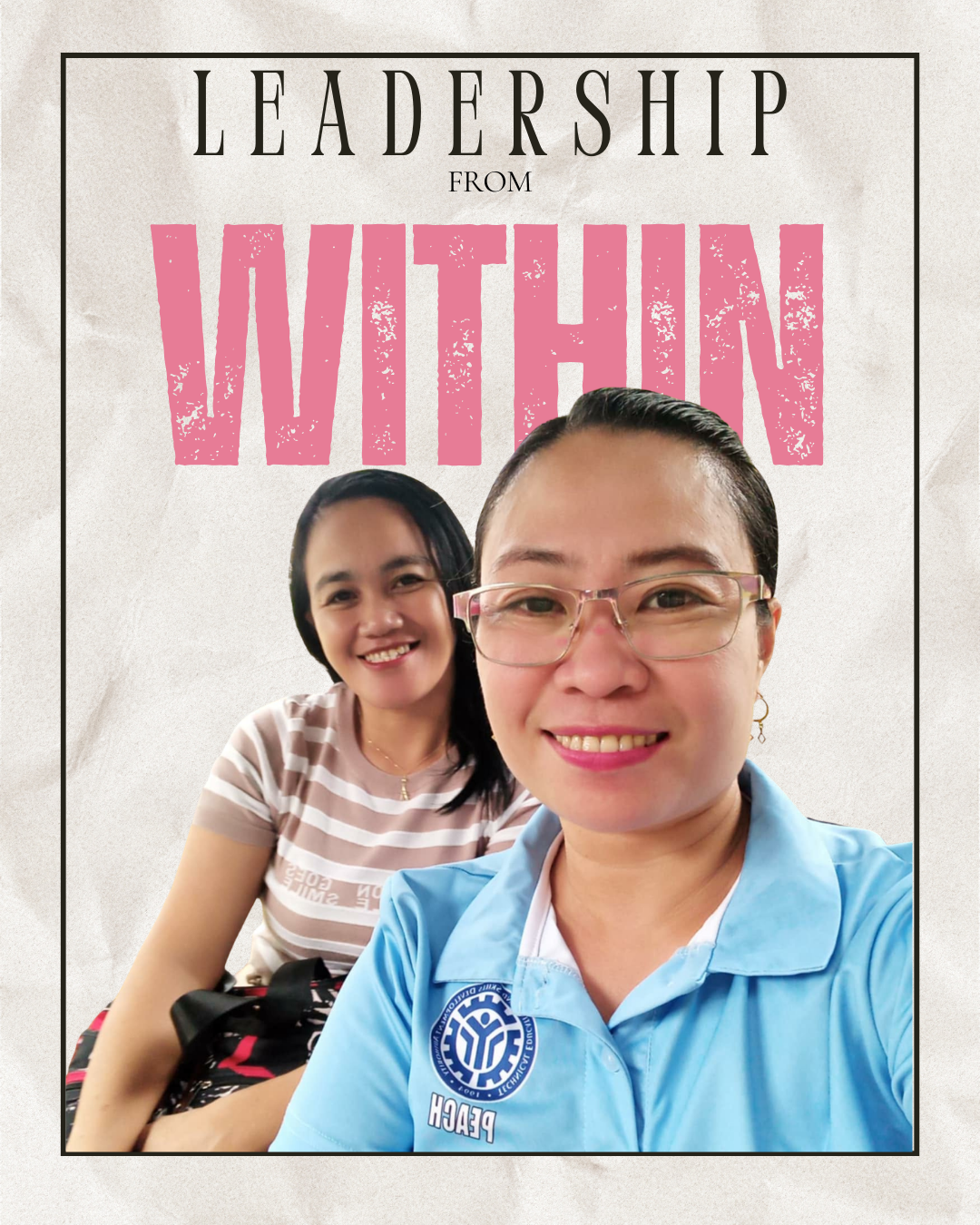
Governance is often associated with resolutions, reports, and raised hands inside meeting halls. But if this week’s Inner Conditioning Workshop Kamustahan under SEA Bayanihan Governance proved anything, it is this: the real battleground of leadership is not the conference table — it is the human heart.
In a space meant not for debate but for reflection, our academe partners spoke less about policies and more about patience. And perhaps that is exactly the point. Before we can govern communities, we must first learn to govern ourselves.
Ms. La-arni Vargas offered a quiet but piercing reminder about forbearance. She shared how she consciously chooses understanding over assumption, even when faced with negative impressions from others.
“We carry different crosses in life,” she reflected. “Indi naton paghusgaran ang reaksyon sang iban, kay ang krus nga ginbutang sa aton, ginbutang na kay kaya naton — kag may giya kita.”
It was not a dramatic declaration. It was grounded. Personal. Real.
She spoke of moments when reactions could have easily escalated tensions — a misunderstood comment, a cold response, a situation where pride could have taken over. But instead of reacting, she paused. “I cannot control what others think of me,” she said, “but I can control how I respond.”
That distinction matters. In governance work, criticism is inevitable. Misinterpretation is common. But character is revealed not in applause, but in provocation. Temper is optional. Character is a choice.
Meanwhile, Ms. Peach Gastala brought the conversation back to a principle so basic that we sometimes forget its power: the Golden Rule.
“Do not do unto others what you don’t want others to do unto you.”
Simple, yes. Easy, no.
She shared how in tense situations, she holds her temper and thinks first about consequences. Words, once released, cannot be recalled. And in community work, a single careless statement can undo months of trust-building. “It is easy and you are at peace kung wala ka sang nahurt nga iban,” she added.
There was an anecdote about choosing silence instead of retaliation — about walking away from a potentially hurtful exchange not because she was weak, but because she valued peace over pride. That is not passivity. That is discipline.
In an era where strong leadership is often mistaken for loud leadership, these reflections feel almost countercultural. But perhaps the most sustainable form of governance is not fueled by ego, but by emotional maturity.
SEA Bayanihan Governance reminds us that systems are built by people. And people carry burdens unseen by others. Policies may guide direction, but patience sustains relationships. Strategic plans may outline goals, but empathy keeps communities intact.
In the end, governance is not only about managing resources or implementing programs. It is about managing reactions. It is about choosing restraint over retaliation. It is about remembering that behind every disagreement is a human being carrying their own cross.
Sometimes, the strongest governance strategy is self-control.
And sometimes, the most transformative meetings are the ones where we meet ourselves first.



Leave a Reply