
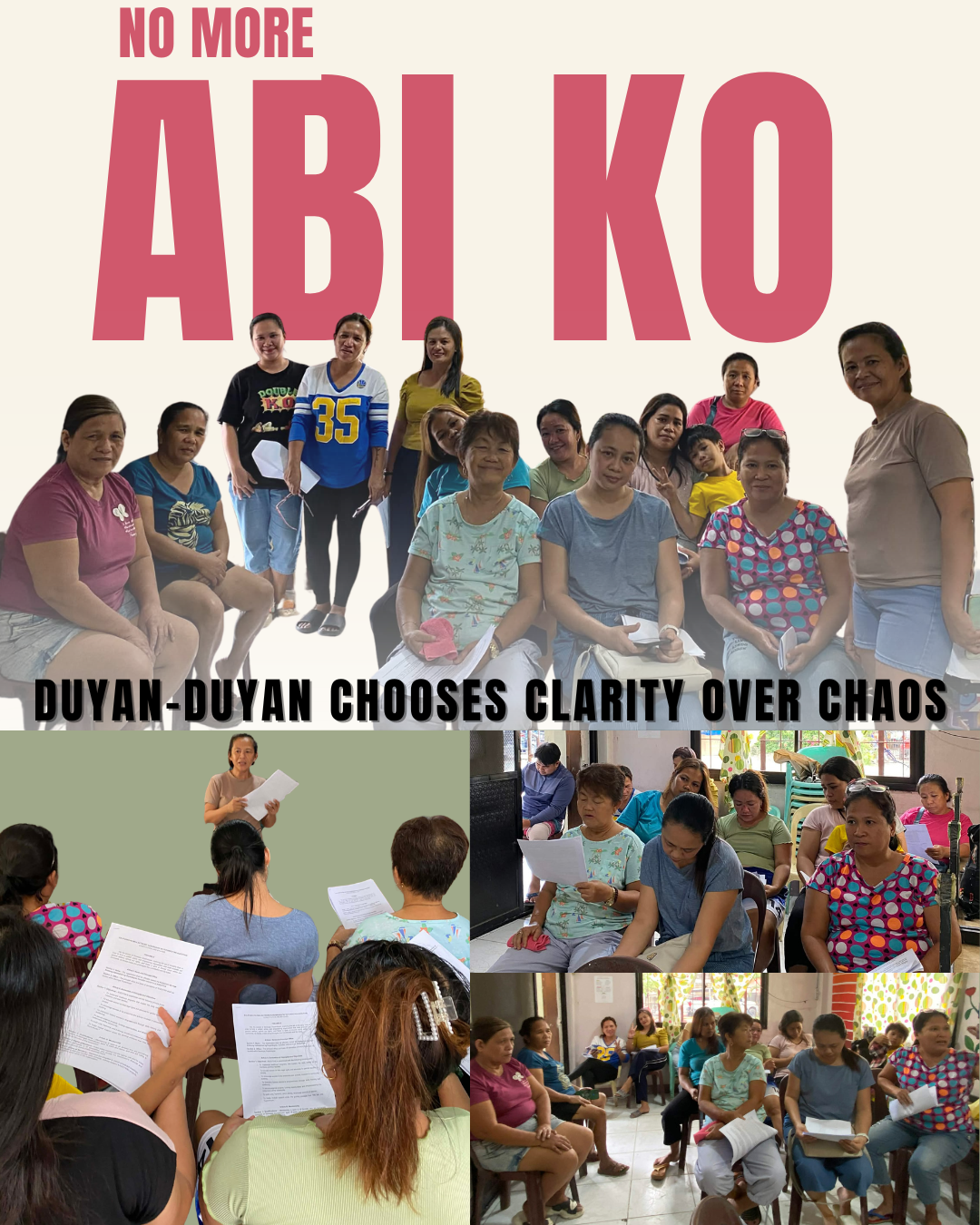
In Brgy. Duyan-Duyan, Santa Barbara, democracy didn’t wear campaign shirts or wave tarpaulins. It carried printed copies of the Constitution and By-Laws. And instead of applause, it invited questions.
Because democracy isn’t just about electing leaders — it’s about agreeing on the rules we all live by.
Let’s be honest. By-laws are often treated like the “Terms and Conditions” of community life. Everybody nods. Few actually read. Until something goes wrong.
But in Duyan-Duyan, they chose a different route. The Constitution and By-Laws were not just read for compliance. They were reviewed, validated, questioned, clarified, and strengthened. There were thoughtful pauses. Healthy debates. And those classic moments of, “Wait, ano gid bala ang provision sini?” — followed by laughter, explanation, and understanding.
That laughter? That’s what democracy sounds like when it’s working. One participant said it best: “Mas nami nga klaro ang rules kaysa may misunderstanding later on.”
Exactly. Prevention is better than conflict resolution. Clarity is cheaper than conflict. And discipline is easier when expectations are clear.
Most organizational drama doesn’t begin with rebellion. It begins with confusion. With assumptions. With “Abi ko amo na bala.”
Validation is not about distrust. It is about ownership. And what unfolded in that room was ownership in action. People weren’t challenging the document to resist authority — they were engaging it to protect the organization. They wanted to know where they stood. They wanted to understand both their rights and their responsibilities.
That’s powerful. Strong organizations don’t run on personalities. They run on principles. Personalities change. Principles remain. One leader remarked during the session:
“Kung klaro ang foundation, indi mabudlayan ang sunod nga officers.”
There’s wisdom in that. When the rules are clear, leadership transitions are smoother. Accountability becomes standard, not selective. Governance becomes structured, not emotional.
This wasn’t just about paperwork. It was about discipline. Structure. Sustainability. It was about saying: We care enough about this organization to define how it runs.
In a time when many communities operate on verbal agreements and unwritten understandings, Duyan-Duyan chose documentation over drama.
That’s not boring. That’s bold. Because real empowerment is not loud. It is informed. When people know the rules, they don’t just follow them — they defend them.
Validated.
Affirmed.
Understood.
Owned by the people.
And that’s how governance stops being a title — and starts being a shared responsibility.


Leave a Reply