
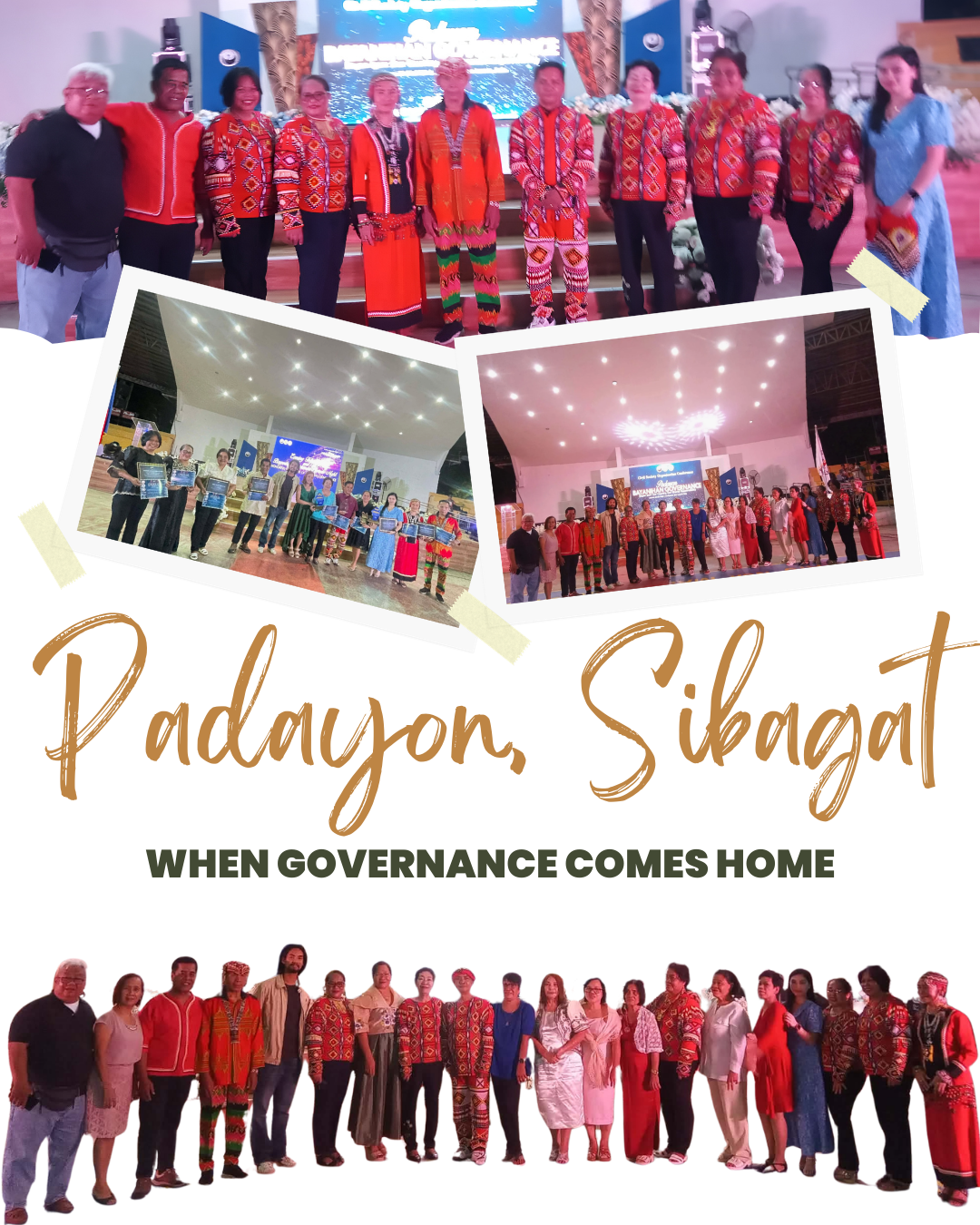
When the Sibagat delegation traveled from Agusan del Sur to New Lucena last January 28–29 for the Padayon Bayanihan Governance National Conference, they packed the usual essentials—documents, expectations, and maybe a few travel snacks. What they didn’t expect to bring home was a sharper sense of purpose.
“Bayanihan Governance” could have easily passed as another well-designed conference theme. But in New Lucena, it felt less like a slogan and more like a working principle. Governance, participants were reminded, is not a solo performance by elected officials. It’s a choir. And everyone has a part.
For Ms. Charmae Balais of the academe, the realization was personal. “Are we forming graduates, or citizens?” she asked herself. The sessions nudged her to rethink education as more than lectures and lesson plans. If students can memorize theories about democracy but never attend a barangay consultation, something is missing. For her, Bayanihan now means preparing young people not just to pass exams—but to participate.
Ms. Erna Libor of Gawad Kalinga found affirmation in the idea that communities are not beneficiaries; they are partners. “Development works best when people build it themselves,” she shared. It was a powerful reminder that progress imposed from above rarely lasts. Progress built together does.
The cooperative leaders from Sibagat Free Farmers MPC and Tag Oyango MPC couldn’t help but smile during discussions on shared accountability. “We’ve been practicing Bayanihan all along,” one quipped. After all, cooperatives run on unity and transparency. The conference simply connected those principles more clearly to governance—ensuring farmers and rural members have a voice where it counts.
For ECOWEB’s Charlie M. Trozo, the biggest takeaway was interconnectedness. Economy, environment, health, governance—“They’re not separate files,” he reflected. “They’re one living system.” Real change, he realized, demands sectors working together, not in silos.
And then there was the quiet pride of Sibagat CSO Desk Officer Ms. Aileen Miot. Watching their LGU and CSO partners receive awards was emotional. “Those plaques represent long nights and stubborn hope,” she said. More importantly, her insight on the People’s Council stood out: it must be more than compliance. It must be a real platform for citizen voices.
As the delegation returned home, they carried no grand illusions—only renewed commitment. Bayanihan, they realized, is not nostalgia. It is daily work.
Padayon is not just a word.
In Sibagat, it is now a responsibility.


Leave a Reply