
In many community meetings, people are often asked the same question: “What are the problems in your community?”
Usually, the room becomes quiet. Not because people have nothing to say—but because sometimes it is hard to explain reality in words.
This is where Photovoice comes in.
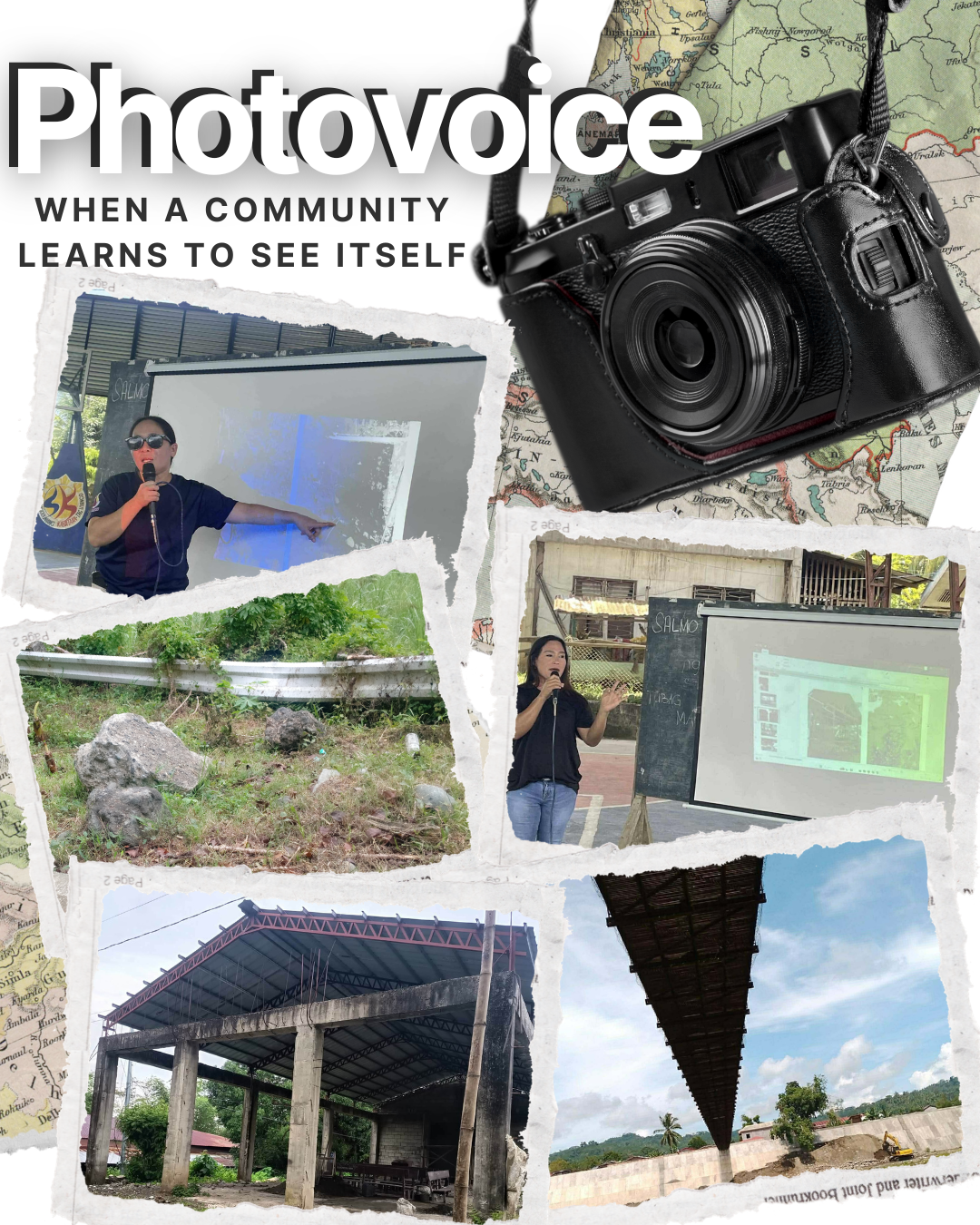
Instead of long speeches and complicated reports, Solution Ecosystems Activator (SEA) Inc. uses Photovoice in its seminars and community orientations to do something simple but powerful: let people take photos of their own community and tell the story behind them.
A cracked road.
A thriving vegetable garden.
A river slowly recovering.
Women running a livelihood project.
Suddenly, the conversation becomes alive.
As the famous photographer Ansel Adams once said, “You don’t take a photograph, you make it.” In Photovoice, communities are not just taking pictures—they are making meaning of their everyday lives.
During SEA Inc.’s workshops, participants are asked to capture images that represent the strengths, struggles, and hopes of their barangay or municipality. Each photo becomes a story. Each story becomes a reflection. And from those reflections, something interesting happens—patterns begin to appear.
One participant may photograph a neglected pathway farmers use every day. Another may capture a women’s group that quietly sustains the community. A youth volunteer may photograph a coastal area needing protection.
At first glance, they are just pictures. But when people start talking about them, the photos reveal something deeper: what the community truly values and what it urgently needs.
The writer Susan Sontag once observed, “To photograph is to frame reality.” Photovoice allows communities to frame their own reality—not the version written in reports, but the one lived every day.
For SEA Inc., this simple activity has become a powerful tool for strategic planning and participatory governance. Because instead of planning based only on documents and statistics, decisions are grounded on real stories, real places, and real people.
And perhaps the most beautiful part of Photovoice is this: it reminds everyone that communities are not just subjects of development plans.
They are the authors of their own story.
Sometimes, all it takes is a photograph—and the courage to say,
“This is our community. This is our reality. And this is how we can make it better.”


Leave a Reply