
Let’s be honest: many General Assemblies are predictable. There’s a program, a few nods, some applause, and a plan that gets approved faster than you can say “next agenda.”
But Brgy. Wari-Wari decided to do something radical.
They thought.
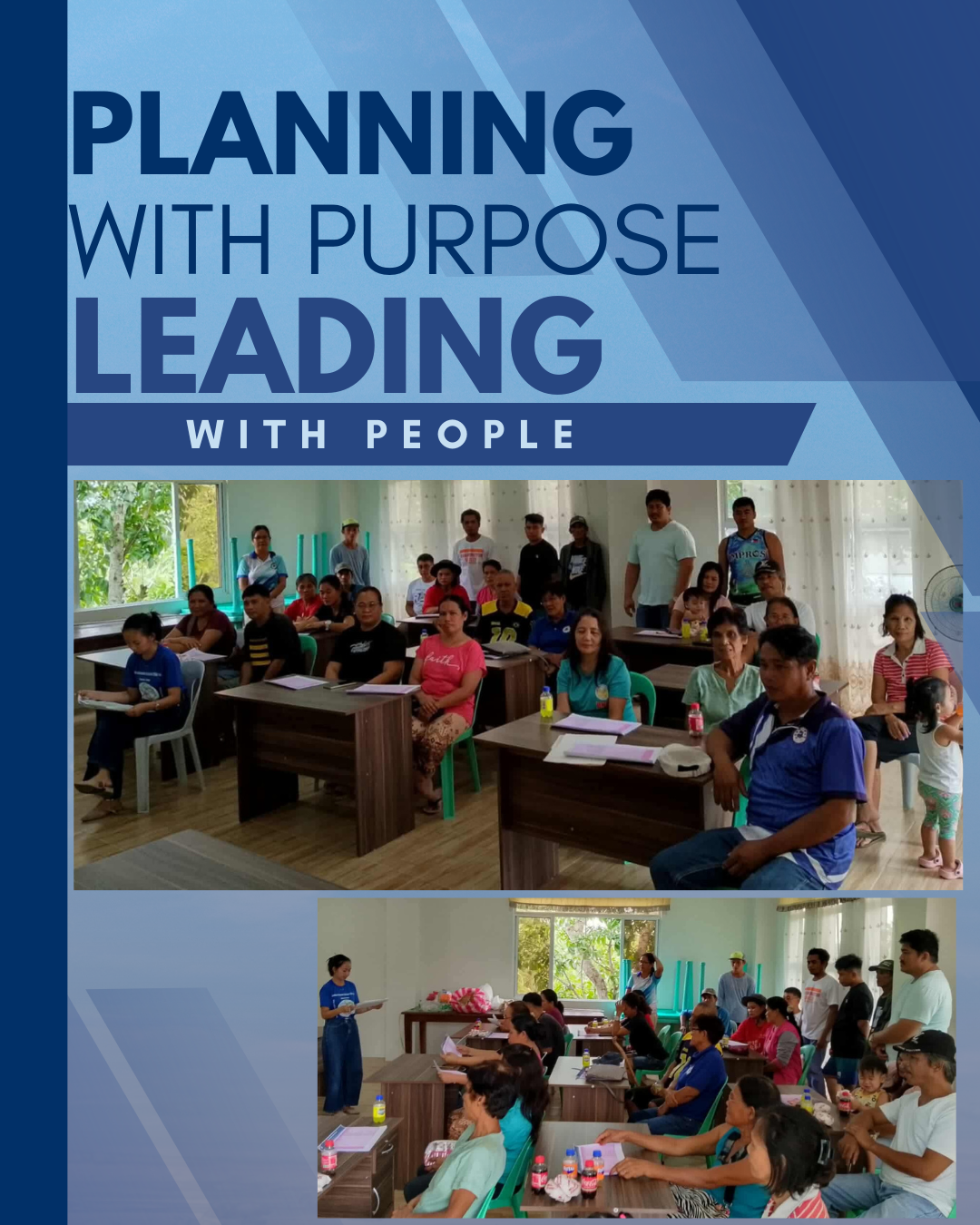
Through the efforts of SEA Inc’s Bayanihan Governance Program, the community gathered not to decorate a document with signatures, but to interrogate it. The Strategic Plan, Mission, and Vision were not treated as sacred scrolls. They were treated as working drafts — subject to scrutiny, logic, and reality.
And that is refreshing.
Every Project, Program, and Activity (PPA) went under the microscope. Some stayed. Some didn’t survive the test of feasibility. And that’s a good thing.
Because planning is not a wishlist.
It is a contract with the future.
“A plan that promises everything often delivers nothing.”
What stood out wasn’t just the content of the discussion — it was the culture of it. Participants asked hard questions. They clarified. They debated. They listened. Transparency was not announced; it was practiced.
When people are trusted with information, they rise to the occasion.
After thorough deliberation, the Strategic Plan, Mission, and Vision were formally adopted — not because they were perfect, but because they were collectively owned.
And here’s where it gets even better: the Barangay Development Council (BDC) committed to quarterly monitoring.
Not just launch and forget.
Not just approve and archive.
But monitor and adjust.
That’s the difference between planning for compliance and planning for change.
In the framework of Bayanihan Governance, accountability isn’t an afterthought — it’s built into the system. A plan without monitoring is just optimism. A monitored plan becomes governance.
Credit is also due to Punong Barangay James Sunganob, whose openness to participatory processes proves a simple truth:
“Strong leadership is not about controlling the room. It’s about empowering it.”
Brgy. Wari-Wari reminded us that when citizens are invited to the table — genuinely invited — they don’t just sit quietly. They engage. They refine. They take ownership.
And that is the real headline.
The future of Wari-Wari is no longer a document drafted by a few.
It is a direction shaped by many.
If this is how they plan, imagine how they will lead.


Leave a Reply