
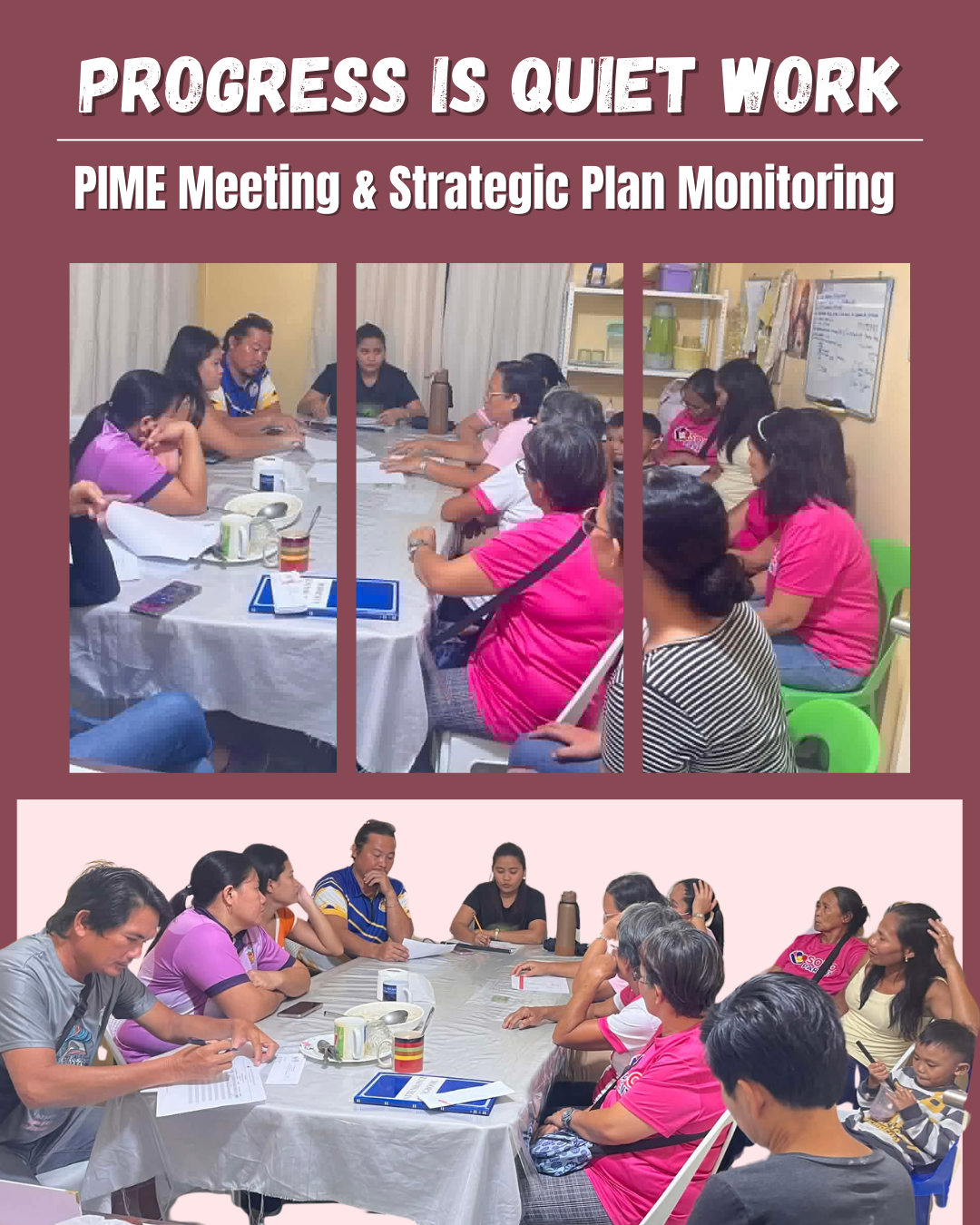
Progress rarely announces itself with applause. More often, it sits quietly in barangay halls, written on manila paper, debated over plastic chairs, and reviewed line by line. That was the atmosphere during the recent PIME Meeting and Strategic Plan Monitoring in Bololacao.
There were no dramatic speeches. No ribbon-cutting ceremonies. Just reports, updates, clarifications — and the steady rhythm of accountability.
What struck me most was how grounded the conversation felt. Instead of asking, “What can we promise next?” the discussion revolved around, “What have we accomplished? What still needs work? Where are we falling short?” That shift from projection to reflection is where real governance begins.
One community member candidly shared, “Mas maayo nga ginareview naton ang plano kaysa magpadayon ta nga wala kabalo kung ara pa kita sa dalan.” It was an honest admission that planning without monitoring is just guessing. And guessing is expensive — especially for communities working with limited resources.
The PIME session was not about finding fault; it was about finding footing. A barangay official recounted how a proposed activity last year looked good on paper but faced delays due to coordination gaps. Instead of defensiveness, there was ownership. “Aton ini nga responsibilidad,” he said plainly. No excuses. Just acknowledgment.
That kind of culture matters.
Strategic plans often sound impressive during launch. They are filled with timelines, objectives, and measurable indicators. But the true test is not in how well they are written — it is in how honestly they are monitored. In Bololacao, monitoring did not feel like compliance. It felt like commitment.
There was something powerful about seeing leaders and community members lean in during discussions, asking practical questions: Are we within budget? Who is responsible? What is the timeline? What support is needed? The tone was not confrontational. It was collaborative.
Less guessing. More action.
Progress, after all, is not loud. It does not trend online. It does not always produce instant results. It is planned carefully, reviewed regularly, and owned collectively.
The meeting reminded everyone in the room that development is not accidental. It is intentional. It requires showing up even when there is no spotlight. It requires speaking up even when it is uncomfortable. It requires stepping up even when the work is tedious.
Steady, intentional, community-driven progress may not look glamorous. But it is sustainable.
And in governance, sustainability is the real victory.


Leave a Reply