February arrived quietly at SEA, carrying with it the month of love—and a question that was both gentle and brave. On February 2, 2026, the staff paused their deadlines, checklists, and follow-ups for a simple but powerful reflection:
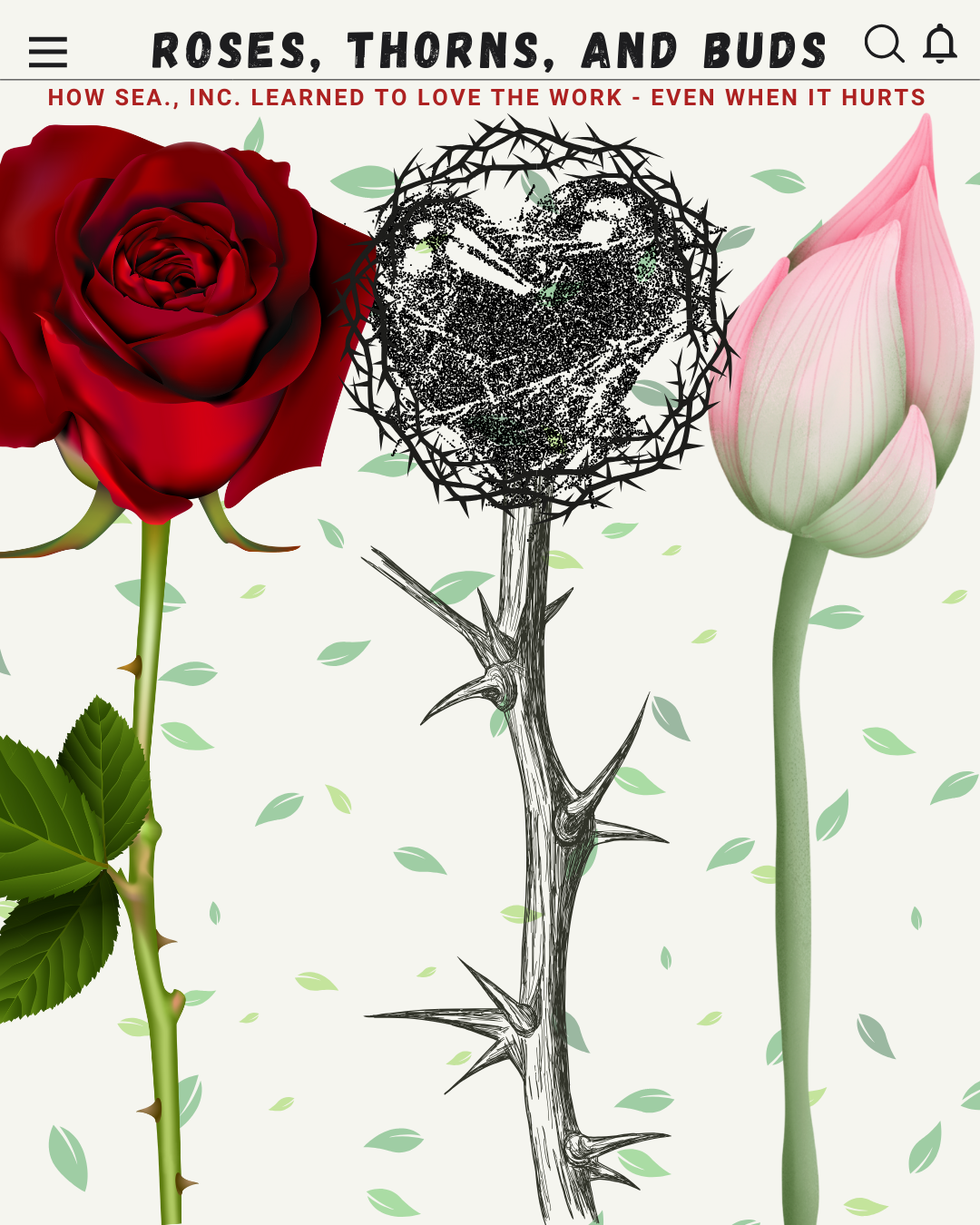
What are your roses, your thorns, and your buds?
Two minutes each. No PowerPoint. No polish. Just truth.
What followed was not a meeting. It was a mirror.
The Roses: Love in the Work We Do
Unsurprisingly, one rose bloomed again and again: the CSO Conference.
For many, it wasn’t just an event—it was proof.
Angela shared how the conference showed real impact at the barangay level, validating SEA’s work not just internally but to partners like LifeBank.
“That’s where we proved our project is effective,” she said.
Gem smiled through her rose: surviving her first month in SEA.
“I survived January,” she laughed, a statement that carried more weight than it sounded.
For others, roses came quietly. Jean spoke of more time with family. Jackie shared about new friendships formed. Leslie called it a “new leap of faith where dreams are becoming reality.”
And Ma’am Anne reminded everyone that behind the success were people—tired, emotional, but guided:
“God guided us to conduct the activity, even with high tensions and emotional rollercoasters.”
Love, it turned out, wasn’t abstract.
It looked like cooperation. Like showing up. Like staying.
The Thorns: The Part We Don’t Post Online
Then came the thorns—and the room softened.
Angelic admitted there were moments during conference preparations when she wanted to curse but didn’t.
“They were obligations,” she said plainly.
Ungrateful reactions. Sudden surprises. Money worries. The kind of thorns that don’t bleed publicly but sting deeply.
Carlo spoke with honesty that hung heavy in the room. In Bingawan, he felt the coldness of people, strained LGU relationships, unanswered messages.
“I felt ashamed,” he said, recalling how CSO members had to arrange their own transportation due to unmet commitments.
Mayang’s thorn cut differently: her father was sick—and no one was there to care for him.
Jean shared about getting sick, mending a friendship that almost broke, and learning how fragile connections can be.
Kurt spoke of being overwhelmed, dropped from a subject, and not knowing what to do next.
These weren’t professional setbacks.
They were human ones.
And that mattered—because SEA’s work has always insisted that the people doing development also deserve care.
The Buds: Hope, Still Growing
After the thorns, the buds felt almost sacred.
Angelic looked forward to moments together—when teamwork felt natural, complaints were few, and unity was real.
Angela spoke of personal growth and independence.
Gem hoped for more time with SEA, more learning, more growth—even new people.
Carlo’s bud was brave:
“To regain trust and commitment from the LGU. Continuous effort.”
No bitterness. Just resolve.
Mayang’s wish was simple and profound:
“Good health for my dad.”
Ma’am Os hoped for better relationships and good health.
Ma’am Avha spoke of doing your best wherever you go, trusting that good intentions open doors.
And Ma’am Anne closed with a reminder that felt like both grounding and blessing:
“Fear no one as long as you know your intentions. Always remember why we are here—to serve humanity.”
Why This Reflection Mattered
In development work, reflection is often skipped. There’s always another deadline, another report, another community to visit. But SEA understands something essential:
You cannot build communities if you are disconnected from your own humanity.
The roses reminded the team why they stay.
The thorns allowed them to be honest without shame.
The buds gave everyone permission to hope again.
In the month of love, SEA didn’t exchange chocolates or flowers. They exchanged truth.
And maybe that’s the deepest form of love in this work—the kind that says:
I see you. I hear you. We’ll keep going.
Because at SEA, love isn’t just felt.
It’s practiced.

Leave a Reply