
Monday meetings are supposed to be predictable. Attendance. Updates. Deadlines. Who’s going where. What’s overdue. Who forgot to reply-all.
But at SEA, Monday decided to be existential.
The question dropped casually, almost innocently:
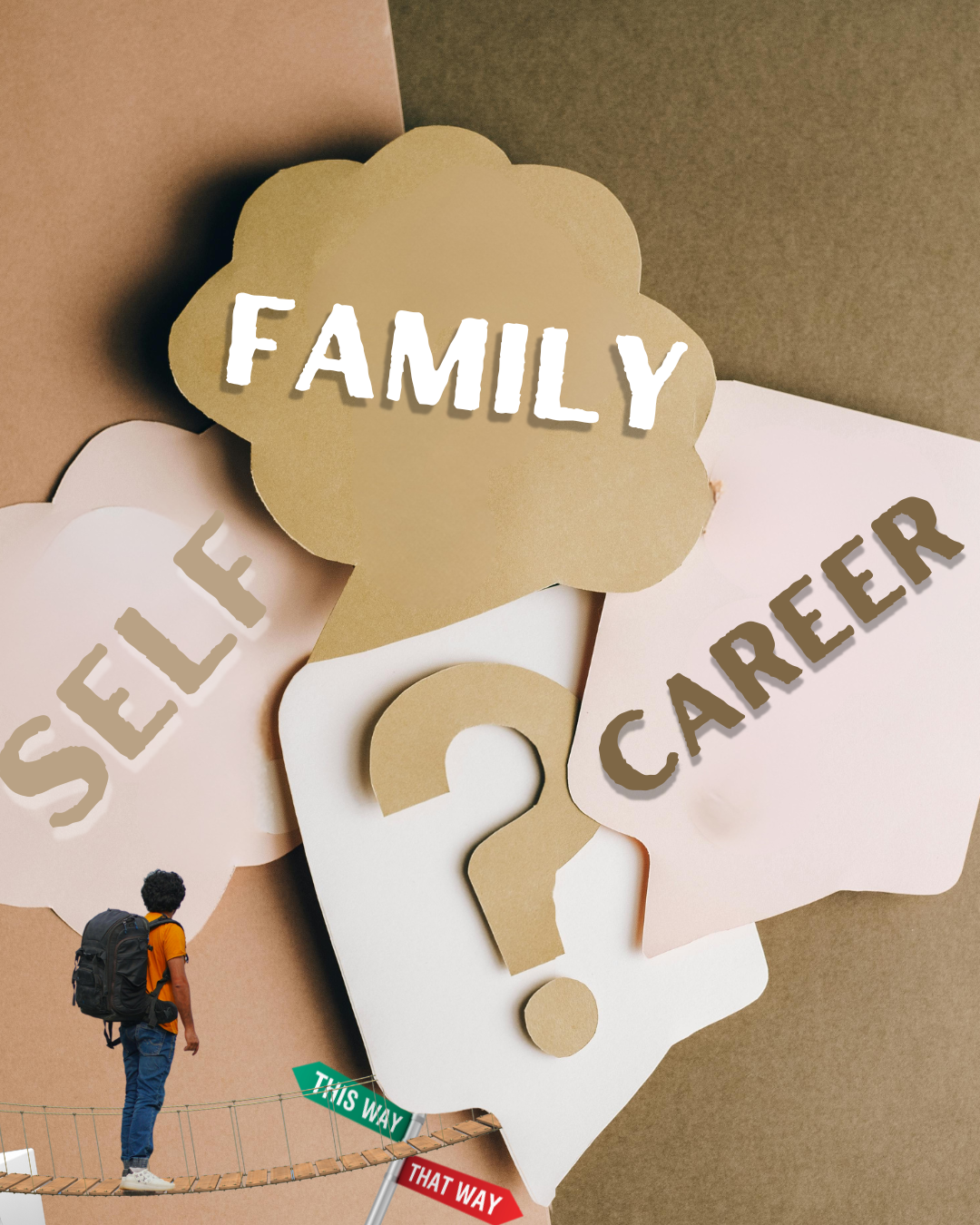
“Considering your current situation, what will you choose — Self, Family, or Career?”
Simple question. Dangerous answers.
Because in governance work — especially one anchored on Bayanihan — you can’t pretend your personal life is separate from public service. The cracks follow you to the conference table.
And that’s when the honesty began.
Rosanna went first, practical as ever. “All three are important. You can’t ignore one over the other.” Diplomatic. Balanced. Very governance-coded. But if forced? “Family.”
Then she told a story that quietly dismantled everyone’s composure. She was watching Anghel sa Lupa with her son, translating the Tagalog scenes for him. Halfway through, he went unusually silent. When she turned, he was crying.
He told her, “Mom, you need to visit your mother while she’s still alive.” Out of the mouths of children come inconvenient truths.
She told him gently, “I’m your guardian angel.” But behind that reassurance was something deeper — regret over not spending enough time with her own parents.
Time, she reminded everyone, is incomparable to money. In governance, we talk about resource allocation. But no spreadsheet measures missed moments.
Angelic took a different route. “It depends on the situation.” She admitted something many won’t say out loud: she rarely chooses herself. And mentally, that costs her.
She hasn’t gone home to her father in Miagao. She hasn’t visited her mother in Mindanao. The weight of responsibility often disguises itself as dedication. But this time? “I choose Self.”
Not selfishness. Self-preservation. “Love yourself so you can love others. Put God in between everything else.”
That line didn’t sound like a cliché. It sounded like someone who learned the hard way that burnout doesn’t announce itself — it accumulates quietly.
Then she turned to Leslie, remembering her as a volunteer — “a strong, independent girl.” Growth recognizing growth. Leadership acknowledging transition.
That’s Bayanihan too — cheering when someone outgrows their starting point. Leslie, on her last week with SEA, carried gratitude like fragile glass.She thanked Ma’am Ann, Ma’am Os, Angelic. Years of first-job memories don’t dissolve easily.
She chose Family. “It’s okay to choose them rather than yourself. It shows you care.”
But she also spoke about growth. If her job application had been rejected, she would have studied again. “Your soul needs to grow.” Thankfully, she was accepted.
Leaving your first workplace feels like breaking up with a version of yourself. But staying stagnant is worse. Organizations that truly believe in development don’t chain people. They bless them.
Jean and Janna kept it blunt. “How can you help your family if you can’t help yourself?”
Jean quoted what should probably be framed in every office pantry: “You can’t pour from an empty cup.” Janna added, “When life gets overwhelming, it’s fine to choose yourself.” Imagine that — permission to rest in a culture that glorifies exhaustion.
Bayanihan Governance isn’t about heroic burnout. It’s about sustainable contribution.
Gem’s answer felt like a confession. After years of being an overachiever — academics, career, expectations — she realized she was always last on her own list.
“So now, I choose myself.” Not out of rebellion. Out of wisdom. Because if she isn’t at her best, she cannot help others. That’s the paradox: the more grounded you are, the more useful you become.
Carlo didn’t hesitate. “Family.”
After his mother’s hospitalization, life rearranged itself brutally. Hospital admission isn’t just a medical event — it’s financial strain, logistical chaos, emotional exhaustion.
He admitted, “We get selfish thoughts.” Honest. Human. But he chooses family, recognizing the quiet sacrifices of relatives who step in when things fall apart.
Bayanihan is not a slogan. It’s siblings coordinating hospital shifts. It’s stretched budgets. It’s shared burden.
Then Ann, steady and reflective, brought it full circle. “Family and Self.”
She quoted Sir Nick: “You can’t achieve success alone.” Career without family becomes hollow ambition. Family without self becomes depletion. Self without purpose becomes isolation.
“We have one body,” she said, “and it gets pulled by all three.” That line lingered.
She also made something clear — she will never block opportunities. We live once. We never know when our candle will lose its light.
SEA, she reminded everyone, is not carved in stone. It adapts. It evolves. People come. People grow. The mission continues.
That’s governance done right — flexible enough to honor individual journeys while keeping collective purpose intact.
Here’s my take: The question was never really about choosing one.
It was about awareness. About recognizing that service begins within. That you cannot preach community empowerment while neglecting your own. That time with parents cannot be postponed indefinitely. That mental health is not weakness. That growth sometimes means leaving. That love sometimes means staying.
Bayanihan Governance works not because of policies alone — but because of people who are honest about their limits, their loyalties, and their longing.
Monday’s meeting wasn’t just routine. It was a reminder:
Before we build stronger communities,
we must learn how to hold ourselves together.

Leave a Reply