
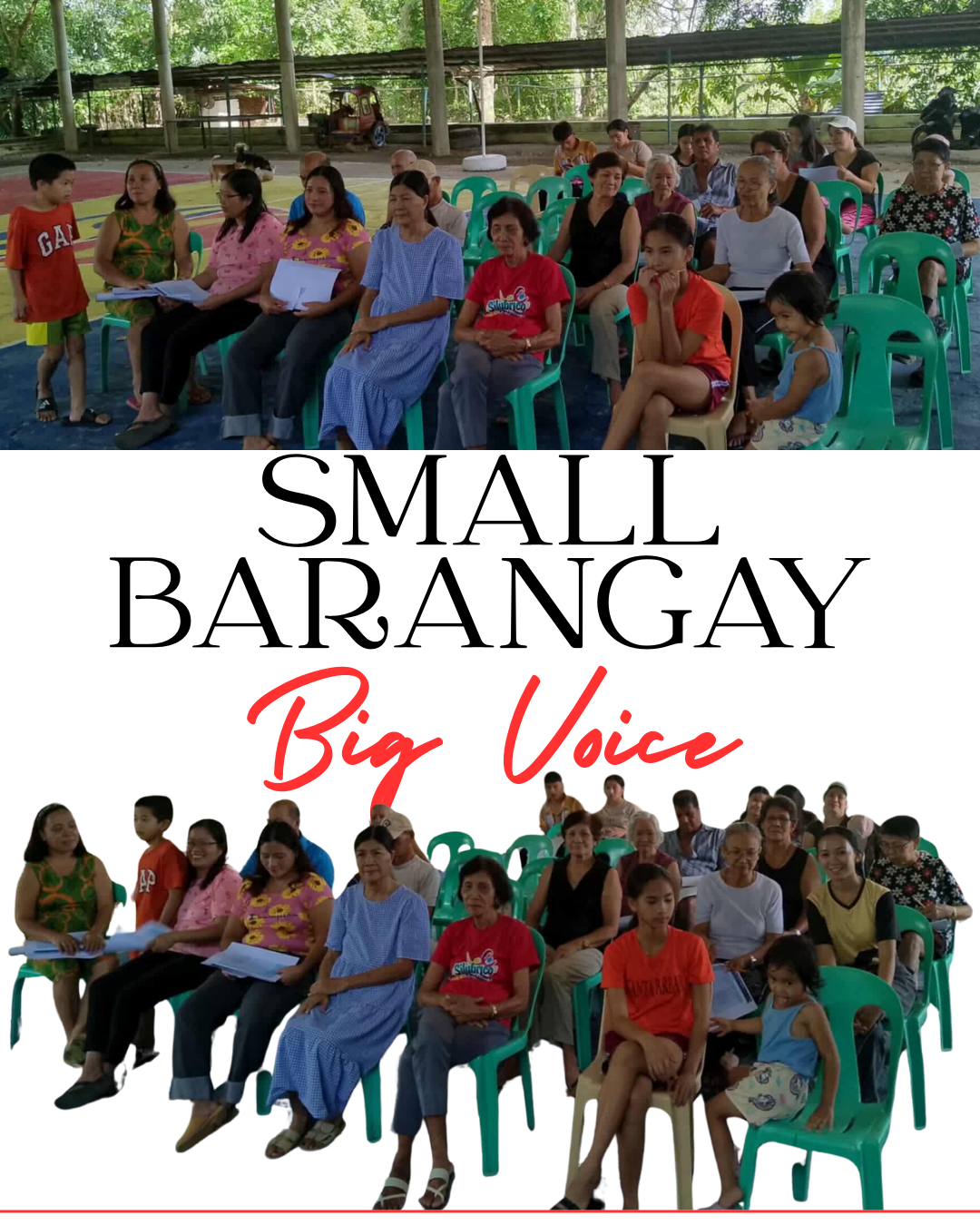
The General Assembly in Barangay Burot was supposed to be routine.
You know the type — attendance sheet, program flow, a few nods of agreement, then everyone goes home.
But this one was different.
Called by SEA Inc for the validation of its Strategic Plan, the gathering turned into something far more powerful: a real community consultation where grassroots voices were not decorative — they were decisive.
Assisted by Ms. Analiza Pacheco, SEA’s Community Facilitator, the session felt less like a formal assembly and more like a working table where everyone had a pen.
And the people noticed.
One resident candidly shared:
“Mas maganda ‘to, kasi tinatanong kami, hindi lang sinasabihan.”
(This is better, because we’re being asked — not just told.)
That line alone says everything.
For years, many communities have grown used to being informed after decisions are made. In Barangay Burot, they were consulted before the ink dried.
Farmers spoke about livelihood priorities — not in abstract terms, but in practical realities. “Kung walang market access, sayang ang training,” one quietly pointed out. Parents reflected on health and youth programs, connecting plans on paper to everyday struggles: clinic schedules, school needs, safe spaces for children.
At one point, a participant laughed and said:
“Akala ko makikinig lang kami. May assignment pala kami.”
(I thought we were just here to listen. Turns out, we had homework!)
And that’s the beauty of participatory governance — it turns passive attendance into active ownership.
The Strategic Plan stopped being a static document drafted behind desks. It became a living roadmap — edited, refined, and strengthened by lived experience.
As Pacheco, reminded everyone: “Ang plano ay hindi dapat galing sa mesa lang, kundi sa karanasan ng komunidad.”
(Plans shouldn’t just come from desks, but from community experience.)
There is something empowering about being asked, “What do you think?”
It signals trust.
It signals respect.
It signals partnership.
And here’s the truth this assembly revealed:
Development is not about institutions deciding for communities.
It is about institutions deciding with communities.
Barangay Burot may be small in size, but its insights were expansive. The consultation proved that when people are invited into the process, they do not waste the opportunity. They think critically. They speak honestly. They contribute meaningfully.
Small barangay.
Big conversations.
Shared ownership.
Because real development begins the moment listening becomes a priority — and today, Burot proved that progress starts with a question, not a command.


Leave a Reply