
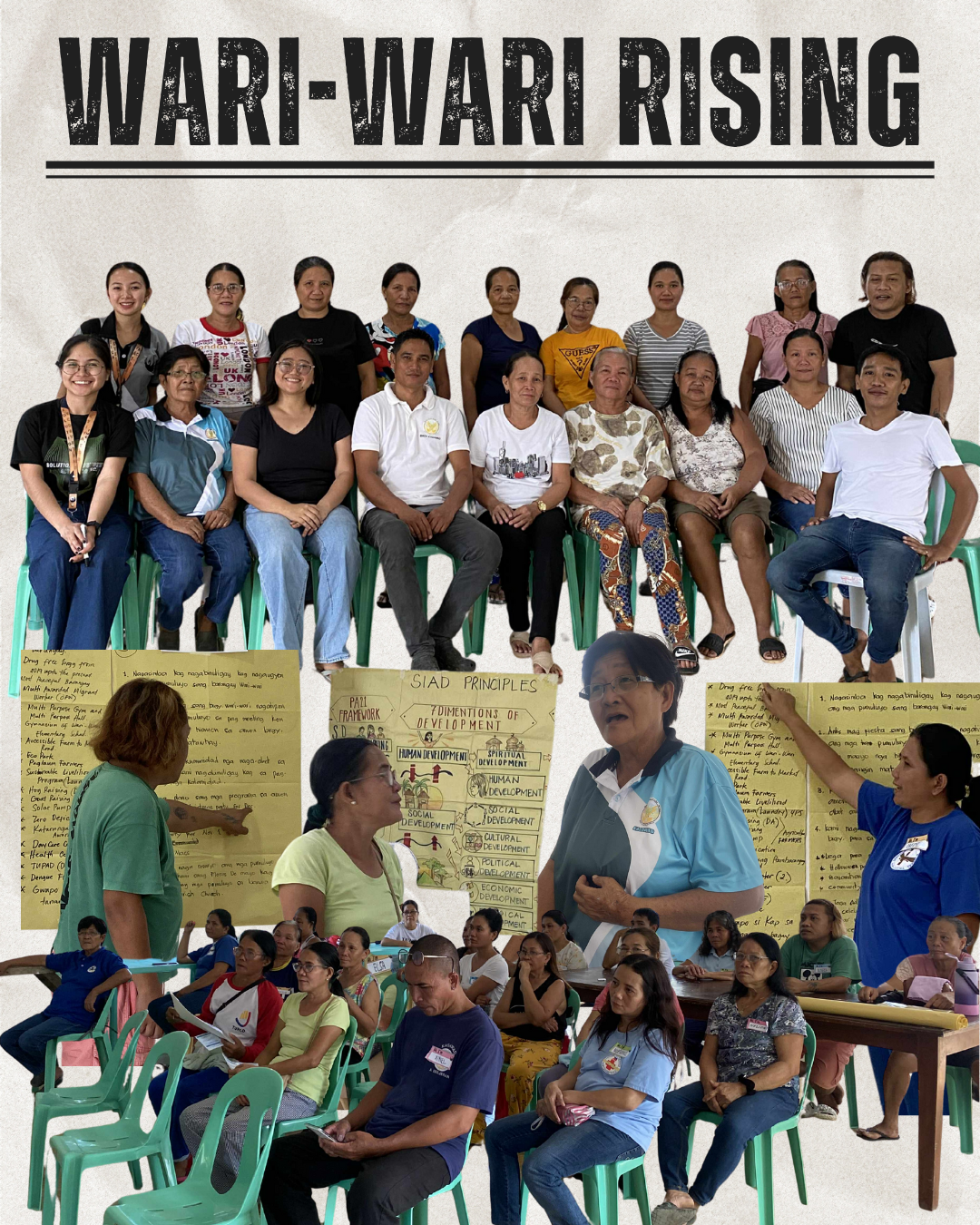
There are workshops that teach. There are workshops that inspire. And then there are workshops like the two-day Appreciative Inquiry (AI) gathering in Barangay Wari-Wari—workshops that gently nudge a community into realizing, “Ay, damo guid gali kami nga kabuhi kag kusog.”
(Oh, we truly have so much life and strength.)
Held on November 27–28, 2025 at the Wari-Wari Multipurpose Hall, the workshop gathered barangay officials, health workers, KALIPI members, 4Ps beneficiaries, senior citizens, tanods, farmers, and TUPAD workers. In short: the lifeblood of the community.
The session began with a prayer led by AMA volunteer Trixie Compuesto, followed by Miss Angela’s explanation of Appreciative Inquiry—a tool that doesn’t start by asking what is broken, but instead asks, “Ano ang maayo sa inyo barangay?” (What is good about your barangay?)
She also introduced the PEACE paradigm—Participatory, Empowering, Appropriate, Community-Driven, and Enabling Access—five principles already taking root in the community.
Discovering What Makes Wari-Wari Special
As the groups talked, shared, laughed, and recalled their stories, something beautiful became clear: Wari-Wari is more than just a barangay with rice fields and banana trees. It is a place loved for its peacefulness, cleanliness, and strong sense of bayanihan (community cooperation). It is a home where elders are respected, where children are nurtured, and where people feel gin-kinatawhan (welcomed and cared for).
Participants proudly spoke of achievements they often forget to celebrate—being a child-friendly barangay, maintaining drug-free status, having accessible farm-to-market roads, clean surroundings, a functional eco-park, and livelihood programs. Someone even added with cheerful conviction that “gwapo si Kap” (our barangay captain is handsome)—and honestly, in community development, confidence in leadership is always a plus.
Moments that made the barangay feel most alive were also remembered with affection: fiestas, community masses, nightly rosaries (rosary every day), Flores de Mayo celebrations, Halloween events, and simple gatherings filled with cooperation and unity. These stories reminded everyone that Wari-Wari’s heartbeat has always been its people.
Dreaming Bigger and Brighter
After reflecting on what makes the barangay strong, the participants moved to dreaming about the future. They shared hopes for their families—success, spiritual grounding, love, respect, and unity. They dreamed of children who would grow with guidance and stay away from harmful influences.
Their vision for the community was hopeful and practical. They wished for stronger services, a functional water system, better medicine availability, more businesses, solar streetlights, CCTVs, colleges, and even air-conditioned barangay facilities. And yes, they boldly wished that when residents reach the age of 60, pensions should automatically come—“walay validation, please.” (without validation, please.)
At the same time, they wanted certain things to remain untouched: unity, calmness of mind (matawhay nga kaisipan), regular prayer meetings, kindness between neighbors, and above all, the peacefulness that makes the barangay feel like home.
With these dreams, the participants created a vision that captures what Wari-Wari hopes to become—a progressive, peaceful, God-centered, clean, culturally-rooted, and skillful community that delivers complete and effective services for all.
The mission that followed was equally heartfelt: to participate actively, create laws that protect people and nature, preserve culture and faith, and work together so citizens become productive, spiritual, and empowered.
Seeing the Realities Through Photovoice
Day 2 began with Trixie discussing photovoice—a tool that uses photography to reveal the challenges in different zones. Instead of traveling far distances, participants captured issues from their own areas.
Photos showed blocked solar streetlights, broken water lines affecting eight households, missing electric posts, damaged drainage, unsafe wiring, and road repair needs. These images didn’t point blame; they pointed the way forward.
Planning the Future—Together
Through strategic planning led by Miss Leslie, the participants created goals and programs across seven dimensions of development. Training programs for livelihood, leadership courses, cultural events, health services, ecological protection, spiritual activities, and youth development all emerged as concrete ideas the community could begin working on.
It wasn’t just a plan. It was a roadmap—one designed by the very hands that would later carry it out.
The Heartfelt Takeaways
In the end, the reflections said it best.
Kagawad Paulina expressed gratitude because the workshop gave them a safe space to voice their concerns.
Nanay Grace appreciated how easy it was to understand the discussions.
Kagawad Renante emphasized that development planning should always involve all sectors, because officials alone cannot see everything happening in the barangay.
And that is the magic of Appreciative Inquiry: it reminds us that development is not about complaints—it is about conversations, connections, and collective courage.
Barangay Wari-Wari proved that when a community celebrates its strengths, dreams boldly, identifies its realities, and plans together, transformation doesn’t begin with a project.
It begins with people realizing:
“Kaya gid naton ini.”
(We can definitely do this.)


Leave a Reply