
Some workshops feel like lectures with snacks.
Others feel like paperwork in disguise.
And then there are those rare ones that feel like a barangay meeting done right—where people talk, laugh, argue gently, remember why they live where they live, and slowly realize: “Ah, we’re building something together.”
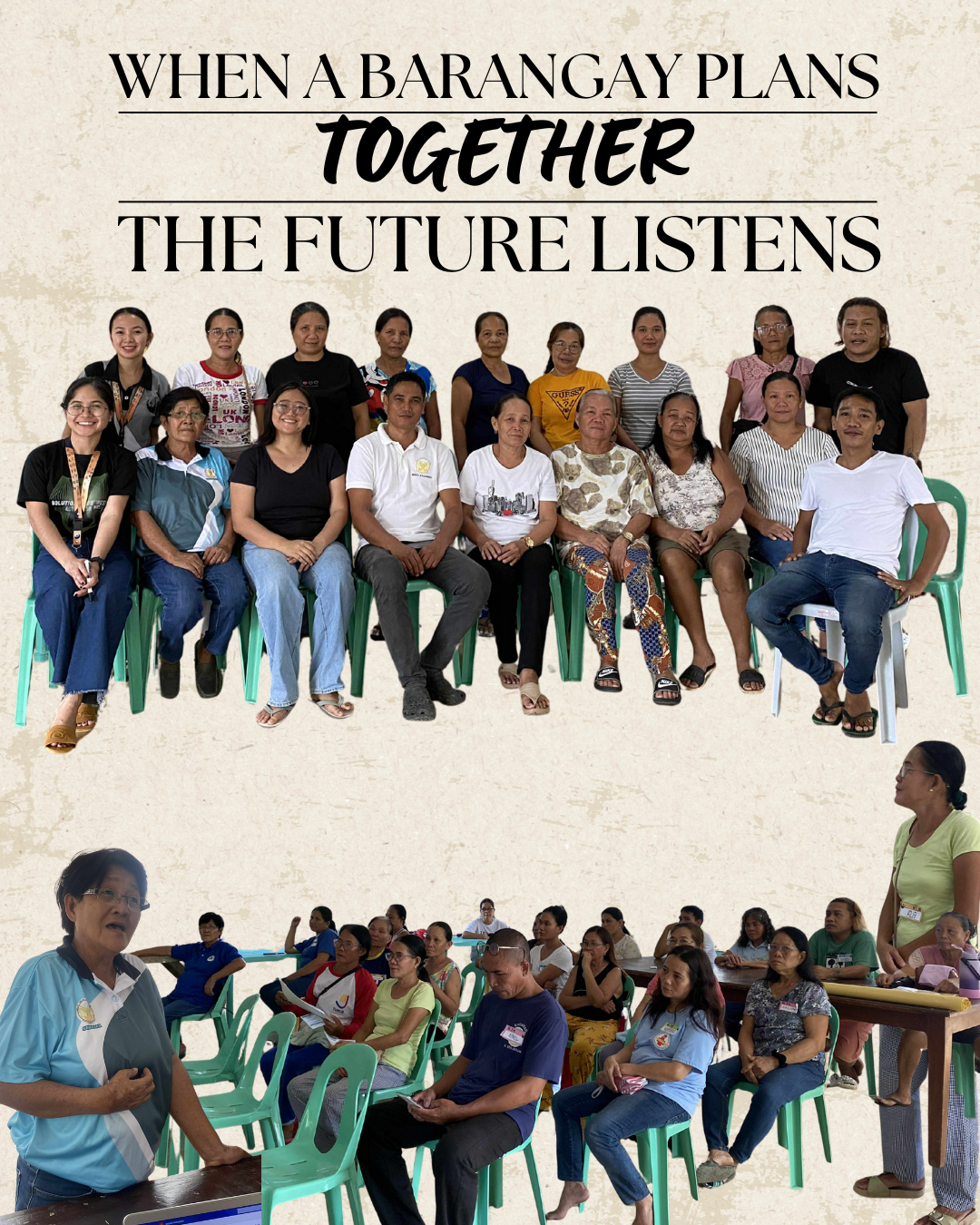
That was the mood in Barangay Wari-Wari, New Lucena, on November 27–28, 2025, during the Appreciative Inquiry (AI) Workshop facilitated under SEA’s IPAT-SIAD approach.
Attendance didn’t just meet expectations—it exceeded them. Chairs filled up. Voices followed. And for two days, governance stopped being abstract and became deeply personal.
Starting With Gratitude, Not Gaps
The workshop opened the way most SEA activities do: with prayer, intention, and clarity. After Trixie Compuesto’s prayer, Miss Angela explained something quietly radical in development work—Appreciative Inquiry.
Instead of asking “What’s wrong here?”, AI asks:
“What’s working—and how do we grow it?”
In Barangay Wari-Wari, that question unlocked stories.
People spoke of a peaceful barangay, clean surroundings, child-friendly spaces, improved roads, a functioning gym, a church, and—said more than once—bayanihan.
One participant summed it up simply:
“Naga-ugyon ang tanan nga pumuluyo.”
Everyone cooperates.
That statement alone explains why SEA insists that governance must be participatory before it can ever be effective.
Achievements, With a Sense of Humor
When asked about the barangay’s best achievements, the list was long and impressive: drug-free status since 2019, zero open defecation, livelihood programs, farm-to-market roads, daycare centers, eco-parks, and awards.
But nestled among them was a line that made the room laugh:
“Gwapo si Kap sa tanan nga bagay.”
It was funny—but also telling. Pride in leadership doesn’t always come from titles. Sometimes it comes from trust, familiarity, and shared history.
That’s Bayanihan Governance in its most human form.
Dreaming Without Apology
The Dream Stage was where the room leaned forward.
People dreamed not just for themselves, but for their children and neighbors: success, spiritual grounding, unity, respect, freedom from vices. For the barangay, they imagined WiFi, better water systems, solar lights, rescue vehicles, businesses, colleges, and automatic pensions for seniors.
Yet when asked what must never be lost amid change, the answers were firm:
- Helping one another during disasters
- Respect between the young and the old
- Monthly prayer meetings
- A peaceful barangay
Progress, yes—but not at the cost of soul.
Vision Written by the People, Not for Them
Barangay Wari-Wari had no formal vision statement before this workshop. Instead of importing one, SEA asked the people to imagine their barangay ten years from now—across spiritual, political, economic, ecological, cultural, human, and social dimensions.
The result was a vision rooted in faith, transparency, cleanliness, cultural preservation, and inclusive services—written in Hiligaynon, because governance must sound like the people it serves.
As one kagawad later reflected:
“We were able to voice out our concerns through you.”
That sentence captures SEA’s role perfectly—not to speak for communities, but to create space where they can speak for themselves.
Photos, Problems, and Practicality
Day 2 grounded dreams in reality through Photovoice. Instead of abstract complaints, participants identified problems in their own zones—blocked solar lights, broken water lines, unsafe roads, missing electric posts.
No blaming. Just evidence.
From there, strategic plans took shape—covering livelihoods, governance, culture, health, ecology, spirituality, and human development. Training lists grew long, not because people wanted seminars, but because they wanted skills, safety, and sustainability.
Why This Matters
At the end of the workshop, Kagawad Renante offered a reflection that felt like a policy recommendation disguised as gratitude:
“This should be the same in the BDC. Other sectors should also be involved.”
That’s the heart of Bayanihan Governance.
SEA’s approach works because it trusts communities to think, plan, and decide together. It reminds us that good governance doesn’t begin with documents—it begins with listening.
In Barangay Wari-Wari, governance felt less like authority and more like family. People didn’t just attend a workshop. They practiced democracy—one story, one plan, one shared future at a time.
And that, quietly and powerfully, is SEA at work.


Leave a Reply