
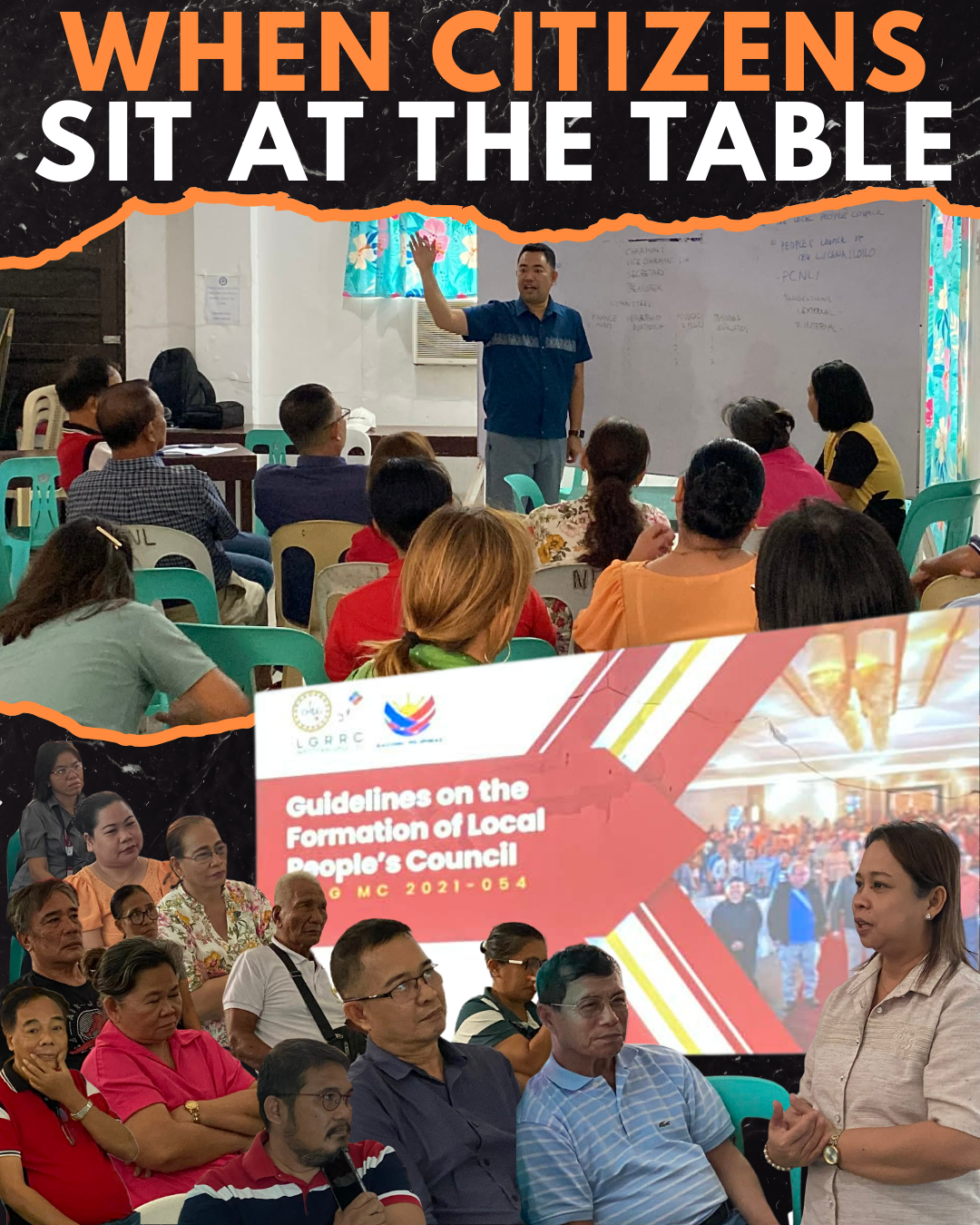
In many communities, governance is often imagined as something that happens inside offices—behind desks, inside conference rooms, and within thick folders of policies and resolutions. But every now and then, democracy stretches its legs, steps outside the office, and sits with the people it is meant to serve.
That is exactly what happened during the recent People’s Council Orientation and Election in the Municipality of New Lucena—a gathering that reminded everyone that governance is strongest when citizens do more than watch; when they participate.
The Orientation: Democracy 101, Local Edition
The activity began with Ms. Jennifer Ealdama, New Lucena MLGOO presenting the formation of the Local People’s Council (LPC)—a mechanism designed to institutionalize the participation of Civil Society Organizations (CSOs) in local governance.
The effort follows the framework set by the Department of the Interior and Local Government through DILG Memorandum Circular 2021-054, which encourages LGUs to formally recognize People’s Councils as partners in development planning, policy advocacy, and monitoring.
On paper, that sounds technical. But on the ground, it means something simpler: ordinary citizens finally getting a microphone in the room where decisions are made.
As one community elder joked during the orientation:
“For years we attended meetings where the microphone was only for announcements. Now it seems the microphone is finally for conversations.”
The Election: Democracy, With Ballots and Banter
Of course, no Filipino gathering is complete without a mix of seriousness and humor. The election of officers—facilitated by Robert Gualta, the CSO Desk Officer—became both a civic exercise and a reminder that democracy can be both orderly and lively.
Before the ballots were cast, participants first tackled a question that often seems simple but carries weight: What shall we call ourselves?
After some thoughtful deliberation (and a few playful suggestions), the majority agreed on a name that captured both identity and purpose: People’s Council of New Lucena, Iloilo (PCNLI).
Names matter. They are declarations of belonging.
As the writer Margaret J. Wheatley once said:
“Relationships are all there is. Everything in the universe only exists because it is in relationship to everything else.”
A People’s Council is, at its heart, about relationships—between citizens, organizations, and government.
The Leaders Chosen by the Community
With the name decided, the election proceeded and the following leaders were chosen to guide the council:
- Rodulfo Asesor – Chairperson
- Nicolas Mana-ay – Vice Chairperson (Internal)
- Jose Malik Jun Sabdani – Vice Chairperson (External)
- Josie Aguilar – Secretary
- Nilo Sangcada – Treasurer
To ensure that the council functions effectively, members also established several working committees:
- Finance and Audit Committee
- Membership and Outreach Committee
- Advocacy and Policy Committee
- Training and Evaluation Committee
Each committee will select its own officers internally—a small but important step toward shared leadership.
During the discussions, one participant quietly shared a reflection that stayed with many in the room.
Years ago, he said, community members would often complain about local projects—roads, programs, or services—yet few had the opportunity to be involved in planning them.
Now, through the People’s Council, the situation is different.
“Before, we were spectators of governance,” he said. “Now, we are participants.”
It was a simple statement, but it captured the spirit of the day.
The Work Begins After the Applause
Of course, forming a council is only the beginning.
In the coming weeks, another meeting will be convened with Mr. Gualta to finalize the Internal Rules and Procedures, craft the Vision and Mission, and develop the Strategic Plan of the People’s Council. An Oath-Taking Ceremony for the newly elected officers will also follow.
These steps may sound procedural, but they are the foundation of something bigger: a culture of participatory governance.
As Kofi Annan once said:
“Good governance is perhaps the single most important factor in eradicating poverty and promoting development.”
But good governance does not happen alone. It happens when government listens, citizens speak, and communities work together.
Democracy, One Meeting at a Time
The People’s Council Orientation and Election in New Lucena may not make national headlines. There were no grand stages or televised speeches.
Instead, there were plastic chairs, community leaders, local advocates, and citizens who believe that governance is not a spectator sport.
And perhaps that is exactly how democracy should look—not distant and formal, but close, participatory, and very much alive.
Because sometimes the most powerful change does not begin with a proclamation.
It begins with a simple meeting where people decide that their voices matter.


Leave a Reply