
There are meetings where people count the minutes.
And then there are gatherings where people forget to check the time because they’re too busy talking, listening, laughing—and occasionally arguing with purpose.
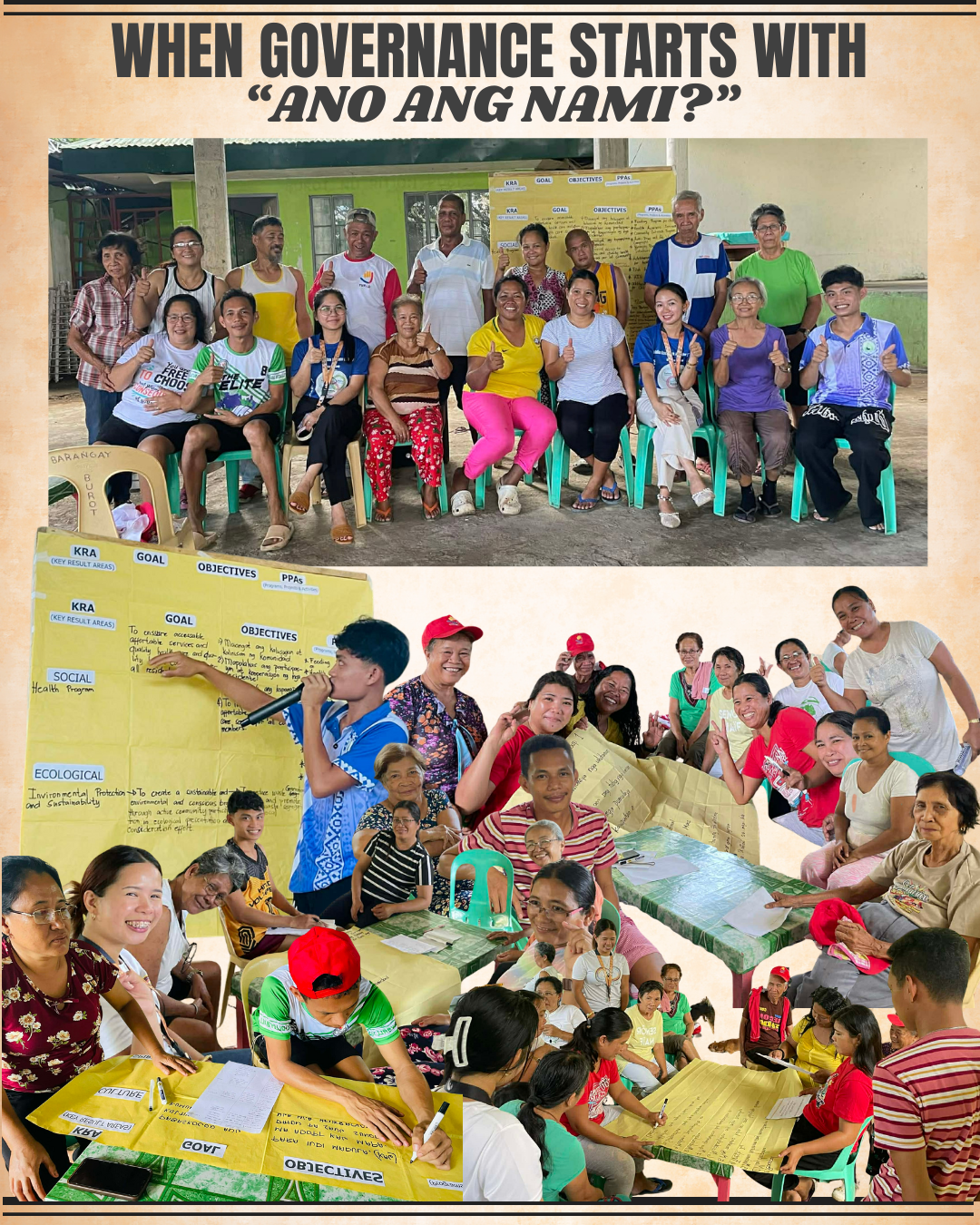
That was Barangay Balabag on December 3–4, 2025, during SEA’s Appreciative Inquiry (AI) Workshop at the barangay covered gym. Target participants were 25. Twenty-eight showed up—both days. In community work, that alone already says something.
It says: people care.
Prayer, Purpose, and a Radical Question
The workshop opened with a prayer led by AMA volunteer Jacqueline Simpas—a fitting start, considering how deeply faith and community are woven into Balabag’s daily life. When Angela Betita introduced Appreciative Inquiry, she didn’t begin with problems.
She began with a question that felt almost rebellious in development planning:
“Ano ang imo nagustuhan nga-a naga-istar ka diri?”
What do you love about living here?
Suddenly, governance wasn’t about deficiencies. It was about dignity.
People spoke of clean surroundings, safety, water access, cooperation, fast barangay services, professionals (especially teachers), and a place where help comes quickly—whether it’s a disaster, illness, or a neighbor in need.
One line kept surfacing, in different words but the same spirit:
“Naga-ugyunay ang mga pumuluyo.”
People cooperate.
That, in one sentence, is Bayanihan Governance—and exactly what SEA means when it says development must be Participatory, Empowering, Appropriate, Community-Driven, and Enabling Access (PEACE).
Achievements, Big and Small—and Proudly Shared
Balabag’s achievements read like a checklist of what local governance can do right when people are involved:
100% water access, TESDA partnerships, livelihood trainings, clean-and-green awards, solid waste management, health centers, farm-to-market roads, and even CDSA medalists.
But what made these achievements resonate wasn’t the list—it was the way people spoke about them. Not as accomplishments of officials alone, but as shared wins.
In SEA workshops, pride isn’t something facilitators inject. It’s something communities rediscover for themselves.
Dreams That Are Practical—and a Little Wild
When the workshop moved into the Dream Stage, the tone shifted from reflection to imagination.
Parents dreamed of children finishing school, becoming professionals, and yes—“maging milyonaryo.” Seniors hoped for unity and moral grounding. Youth envisioned a barangay free from vices, with better facilities and bigger opportunities.
Some dreams were bold enough to draw laughter—a gym with a swimming pool, a mall, everyone owning a vehicle. But SEA understands something important: dreaming big is not foolish—it’s foundational.
What grounded these dreams was the follow-up question:
“Ano ang gusto naton ipabilin bisan magbag-o ang tanan?”
The answers were firm and unanimous: faith in God, respect, cooperation, bayanihan during disasters and celebrations, good manners, honesty, and responsibility.
Progress, yes.
But not at the cost of values.
A Vision Written by the People, Not for Them
Balabag already had a vision statement. But something was missing—culture.
Instead of fixing it themselves, SEA facilitators did what Bayanihan Governance demands: they asked the people.
From seven development dimensions—spiritual, political, economic, ecological, cultural, human, and social—the barangay rewrote its vision in its own voice:
“We, the people of Barangay Balabag…”
Not the officials.
Not the consultants.
The people.
That opening line alone is a quiet revolution in governance.
Photos That Spoke Louder Than Complaints
Day 2 introduced Photovoice, a tool that turned everyday phones into instruments of accountability.
Flooding. Stagnant water. Burnt trash. Unsafe walkways. Waste management issues.
A 4Ps participant captured the value of this perfectly:
“Sometimes it’s hard to explain what is wrong. But with photos, I have evidence.”
This is SEA’s Bayanihan Governance in action—citizens not just consulted, but equipped.
Planning That Felt Possible
Strategic planning followed, covering everything from livelihoods and disaster preparedness to culture, spirituality, youth, and mental health.
What stood out wasn’t the length of the plans—it was the confidence of the people presenting them.
A kagawad shared an honest reflection:
“Before, I attended a DILG workshop and couldn’t understand vision and mission making. Here, I realized how easy it is when it’s explained properly—and when everyone helps write it.”
That’s not just good facilitation. That’s capacity-building, which is at the heart of SEA’s work.
Why This Workshop Matters
Nanay Agnes, a senior citizen, summed it up quietly but powerfully:
“I felt great, thinking that I could contribute to the future of our community.”
In a time when governance often feels distant and technical, SEA’s Appreciative Inquiry workshop in Barangay Balabag reminded us of something essential:
Good governance doesn’t begin with policies.
It begins with people feeling heard.
Bayanihan Governance is not loud. It doesn’t announce itself with slogans. It shows up in full chairs, shared writing, honest photos, and neighbors realizing—together—that the future is something they can actually plan.
And in Barangay Balabag, for two days in December, governance felt less like administration and more like family.
That’s SEA’s work. And that’s how development becomes real.


Leave a Reply