
Storms usually cancel meetings.
In Bingawan, they tested commitment.
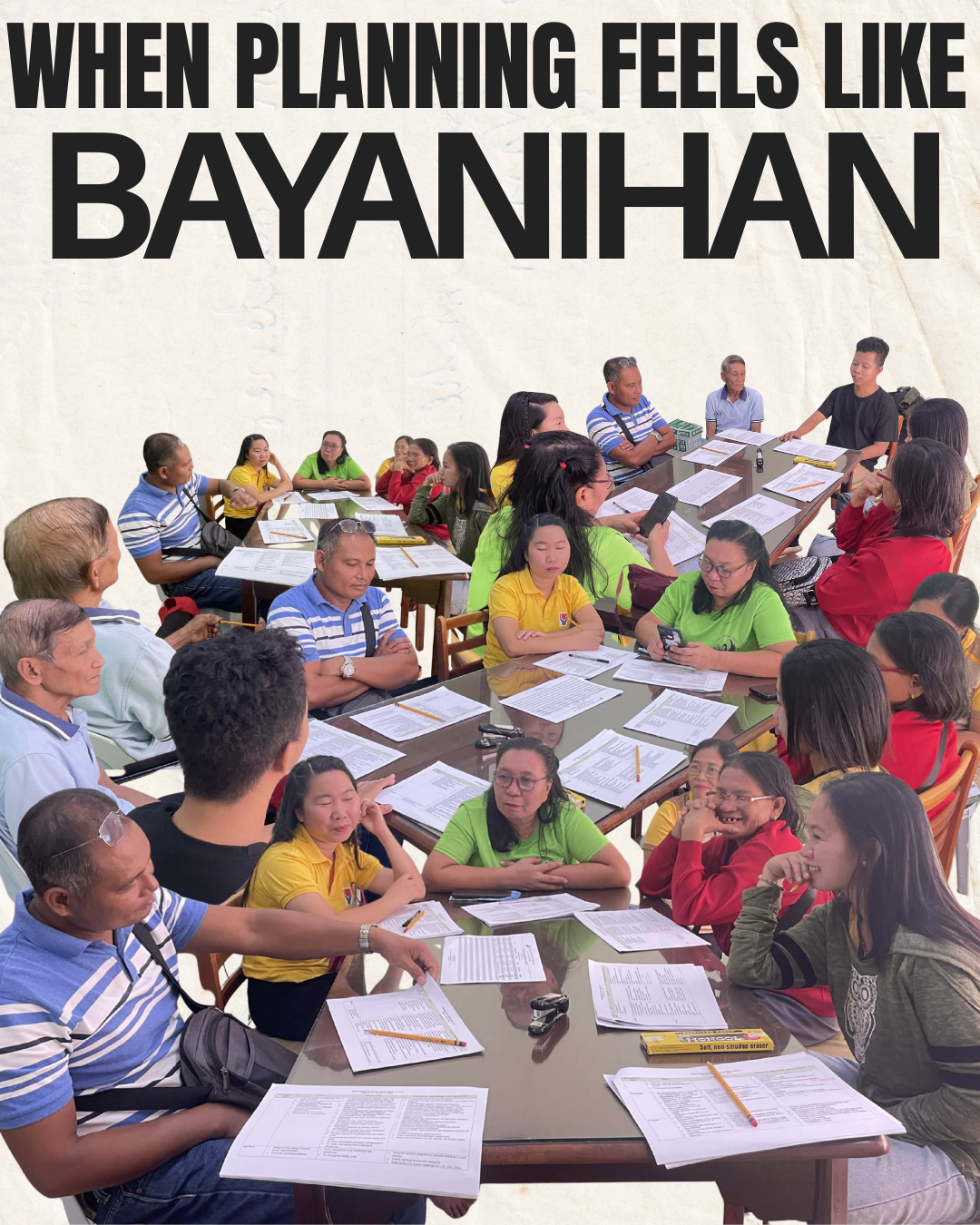
On November 25–26, 2025, while weather and distance tried their best to thin the crowd, local leaders, CSOs, business groups, and community representatives still found their way to the Board Room of Lifebank Academy in Santa Barbara. Attendance dipped from Day 1 to Day 2—but something deeper stayed strong: collective will.
That, in essence, is Bayanihan Governance.
More Than a Workshop, Less Than a Lecture
The Appreciative Inquiry (AI) and Strategic Planning Workshop for the Bingawan Collective IPAT-SIAD Team (CIT) did not feel like the usual sit-down-and-suffer planning exercise. SEA Inc. made sure of that.
Instead of beginning with what is broken, the conversation started with what is working.
Why do you live in Bingawan?
When did you feel your community was most alive?
Those questions alone shifted the room. Planning stopped being technical. It became personal.
Led by SEA facilitators, the workshop blended Appreciative Inquiry, SWOT Analysis, and grounded discussions on the seven dimensions of development—social, spiritual, ecological, political, economic, humane, and cultural. But the real innovation was not the framework. It was who was inside the room.
The mayor sat beside market vendors.
Solo parents shared space with planners.
CSOs, transport groups, women’s groups, farmers, and barangay leaders spoke—not in turn, but in trust.
Bayanihan Governance, Explained Without Jargon
SEA often speaks of Bayanihan Governance—but in Bingawan, it stopped being a concept and became a practice.
Bayanihan Governance means:
- Decisions are not monopolized by the loudest voice.
- Vision is not written by consultants alone.
- Development is not owned by one sector.
Mayor Matt Palabrica captured it best in his opening remarks when he emphasized thinking beyond municipal borders, forming partnerships, and allowing CSOs to meaningfully contribute—not as decoration, but as co-builders of the future.
SEA’s role was also clear—and refreshingly honest.
They do not bring funding promises.
They bring process, capacity, and clarity.
As Ma’am Avha Hilario reminded the group: SEA facilitates how communities think together—so they can decide what they want to build.
From “What Is” to “What Could Be”
Day 1’s Discovery Stage felt like a love letter to Bingawan:
- A peaceful, drug-free, faith-rooted community
- Strong values, transparency, hospitality
- Awards that proved good governance was not accidental
Then came the Dream Stage, where wish lists grew bold:
- Hospitals, water systems, improved transport
- Mental health facilities, modernized farming
- Stronger faith, safer streets, healthier families
The magic?
Dreams were not dismissed as unrealistic. They were categorized, aligned, and owned.
By Day 2, dreams were meeting discipline. SWOT analyses were honest—naming corruption risks, weak implementation, and social fractures—without finger-pointing. Vision and mission statements were crafted in English and Hiligaynon, honoring both clarity and culture.
That bilingual choice alone spoke volumes: governance should be understood by the people it serves.
Why This Matters (Beyond Bingawan)
Strategic plans often die quietly—printed, bound, and forgotten.
This one didn’t feel like that.
Because Bayanihan Governance, when done right, does three things:
- Builds shared language – everyone knows what development means
- Builds shared responsibility – everyone sees their role
- Builds shared patience – change is staged, not rushed
SEA’s facilitation ensured that the final output—strategic plans across all seven dimensions—was not just ambitious, but rooted in lived realities. Even unfinished presentations were not failures, but proof that planning is a process, not an event.
The Quiet Success
Miss Berna Hangonon’s closing remark said it simply: Bingawan is lucky to have its people.
But perhaps the deeper truth is this:
Bingawan is lucky to have a space where people are invited to think together.
In a time when governance is often reduced to compliance and paperwork, this workshop reminded us that real development still begins with a circle of people asking honest questions—and choosing to listen.
That is Bayanihan.
That is SEA.
And that is how planning starts to feel like hope.


Leave a Reply